
There’s a certain enchantment that comes with a steaming bowl of Jjamppong, or Korean Seafood Noodle Soup, that transports me to bustling street corners in Busan. The vibrant colors of the fresh seafood, mingling with noodles and a backdrop of rich, spicy broth, make my heart flutter with anticipation. Cooking this dish always feels like a delightful homecoming, especially when life’s hectic pace leaves little time for joy.
I discovered this recipe on a rainy afternoon, the sound of drizzling rain serving as the perfect soundtrack as I scavenged my kitchen for fresh ingredients. The result? A burst of flavors that not only satisfies my cravings but brings a taste of the ocean right to my table. This hearty soup isn’t just a meal; it’s a celebration of comfort, warmth, and culinary adventure.
So if you’re weary of fast food and yearning for something deeply satisfying, join me in creating a dish that’s as delicious as it is simple to make. Trust me, your taste buds will thank you!
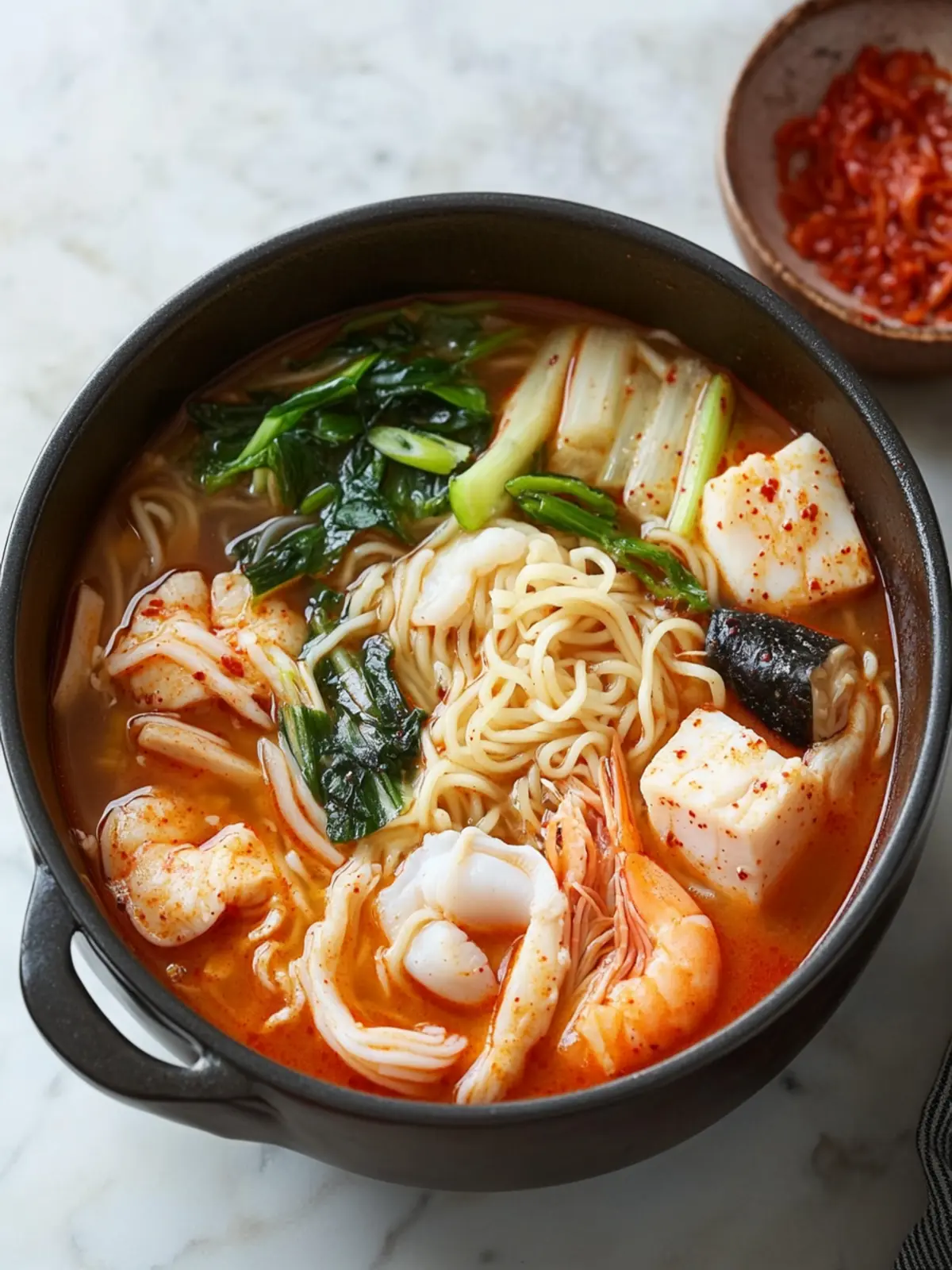
Why is Jjamppong a Must-Try Dish?
Flavor Explosion: The bold combination of seafood and spices creates a symphony of taste that’s simply irresistible.
Hearty and Wholesome: Packed with fresh ingredients, this soup offers a nutritious lift that’s great for any meal.
Quick Assembly: With minimal prep time, you can whip up this delightful dish in no time, perfect for busy weeknights!
Crowd-Pleasing Appeal: Whether hosting friends or enjoying a cozy night in, Jjamppong always impresses with its vibrant presentation.
Culinary Adventure: This recipe is not just a meal; it’s an exploration of Korean cuisine that can spark your creativity in the kitchen. Try serving it alongside a refreshing salad or some homemade kimchi for an unforgettable feast!
Jjamppong Ingredients
For the Soup
• Korean fresh noodles – 8 oz. (230g) of these noodles bring a delightful chewiness to your Jjamppong.
• Cooking oil – 2 tablespoons are essential for sautéing, enhancing the overall flavor.
• Garlic – 3 cloves, minced, to add aroma and depth to the broth.
• Onion – 1/2 small onion, peeled and cut into pieces, for a sweet, savory base.
• Medium-sized shrimp – 8 oz. (230g) (about 10-12) give the dish a lovely seafood essence.
• Manila clams – 12 oz. (350g) bring a briny flavor that compliments the other seafood perfectly.
• Squid – 4 oz. (125g), cut into rings, provide a unique texture and taste.
• Bay scallops or sea scallops – 4 oz. (125g) add richness to the soup.
• Gochujang – 4 tablespoons, the Korean chili paste that gives the soup its signature heat and umami.
• Gochugaru – 1 tablespoon for an additional layer of smoky flavor.
• Chicken broth or bone broth – 4 cups serve as the heart of your nourishing soup.
For the Veggies
• Napa cabbage – 4 oz. (125g), cut into pieces, adds nourishment and a slight crunch.
• Bok choy – 4 oz. (125g) offers a fresh note and bright color to your dish.
• Soy sauce – 1-2 tablespoons or to taste, for a savory depth.
• Salt – to taste, seasoning the broth to perfection.
• Scallions – 2 stalks, cut into strips, for a fresh, crisp garnish to finish your dish.
With these ingredients, your Jjamppong will not only be a feast for the stomach but also for the eyes! Dig in and enjoy a bowl of this vibrant Korean Seafood Noodle Soup!
How to Make Jjamppong
-
Heat the Oil: In a large pot, heat the cooking oil over medium heat. Once warm, add the minced garlic and onion, sautéing until fragrant and slightly golden, about 2-3 minutes.
-
Add Seafood: Toss in the shrimp, Manila clams, squid, and bay scallops. Stir gently to combine, letting the seafood mingle and soak up those lovely garlic and onion flavors for about 3-4 minutes.
-
Mix in the Spices: Stir in the gochujang and gochugaru. Mix well to coat the seafood in the vibrant red-orange paste, allowing the aroma to fill your kitchen—this will take around 1 minute.
-
Pour in Broth: Carefully pour in the chicken broth and bring the mixture to a bubbling boil. Once boiling, reduce the heat and let it simmer for about 10 minutes to meld all those delicious flavors together.
-
Add Greens: Add the napa cabbage and bok choy to the pot. Cook until they are wilted and tender, about 3-5 minutes, making sure they keep a beautiful green color.
-
Cook the Noodles: Finally, add the Korean fresh noodles along with soy sauce and salt to taste. Stir and cook until the noodles are tender, which should take about 3-5 minutes.
-
Garnish: Just before serving, gently stir in the scallions to add a fresh burst of flavor, making your Jjamppong visually appealing and aromatic.
Optional: Top with sesame seeds for an extra crunch and nutty flavor.
Exact quantities are listed in the recipe card below.
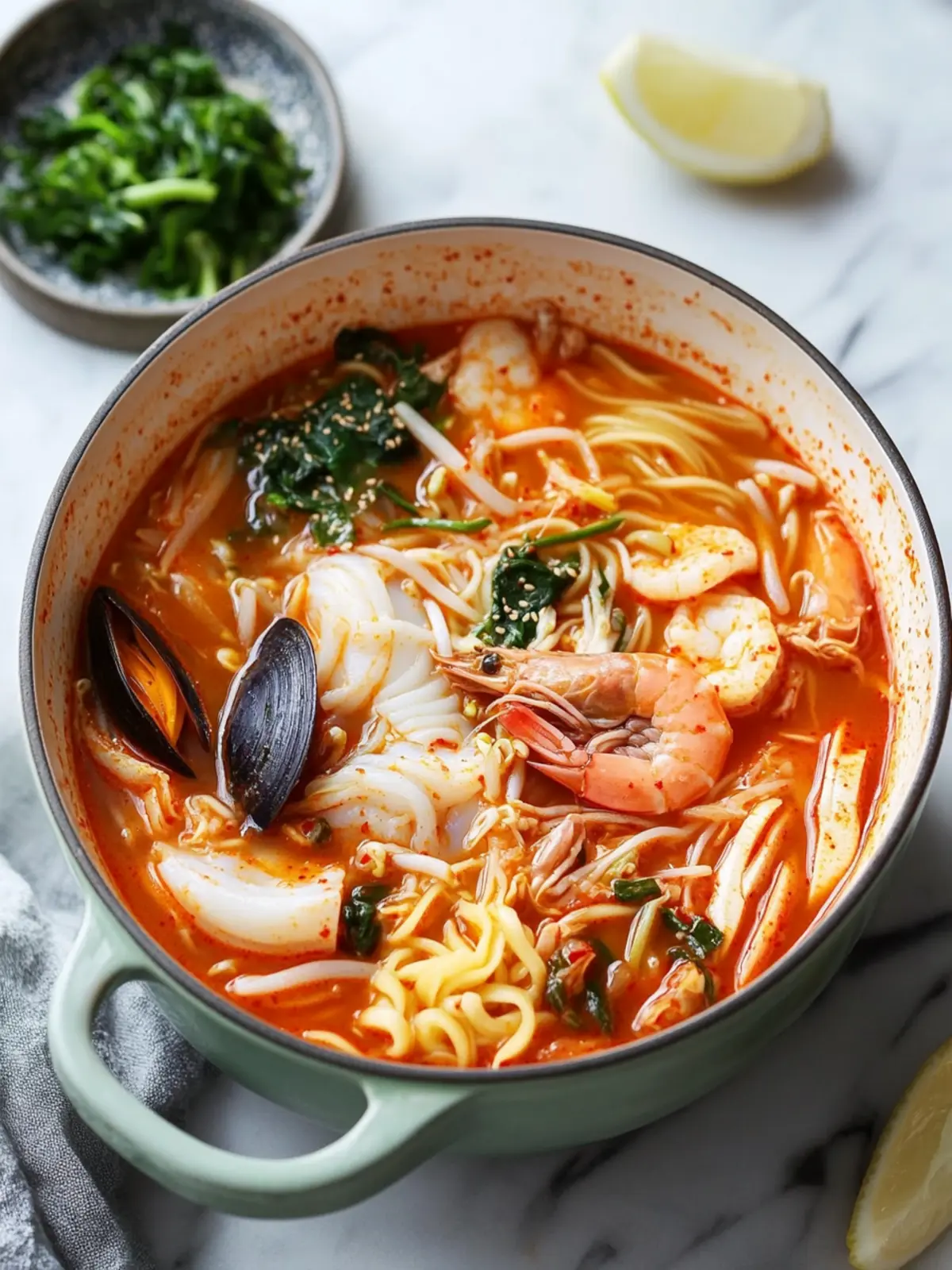
Expert Tips for Jjamppong
• Fresh Ingredients: Always use the freshest seafood available. This enhances the flavor and ensures a vibrant dish that sings of the ocean.
• Balance Heat: Adjust the gochujang and gochugaru to your spice preference. Start with less and gradually add to avoid overwhelming the soup.
• Cooking Time: Be mindful not to overcook the seafood. Shrimp and scallops become rubbery if cooked too long—3-4 minutes is usually enough.
• Noodle Perfection: Cook the Korean fresh noodles separately if you prefer them al dente. Add them to the soup just before serving for a delightful texture.
• Season Smartly: Taste the broth before adding salt and soy sauce. The flavors should be balanced; it’s easy to oversalt with seafood’s natural brininess.
• Garnish for Flavor: Don’t skip the scallions at the end. They add a refreshing touch to your Jjamppong, enhancing both the look and taste of the dish.
Make Ahead Options
These Jjamppong (Korean Seafood Noodle Soup) are perfect for busy weeknights! You can prepare the seafood base—shrimp, clams, squid, and scallops—up to 24 hours in advance. Simply sauté the garlic and onion, add the seafood, and mix in the gochujang and gochugaru. Allow it to cool, then refrigerate in an airtight container. The vegetables can also be prepared ahead; just chop the napa cabbage and bok choy, storing them separately. When you’re ready to serve, simply reheat the mixture, add the chicken broth, noodles, and let it simmer until everything is warmed through. This way, you’ll enjoy a delightful bowl of Jjamppong with minimal effort and just as delicious flavors!
What to Serve with Jjamppong?
A steaming bowl of Jjamppong is best enjoyed with delightful pairings that elevate the meal and enhance the flavors.
-
Steamed Rice: The fluffy texture of white rice soaks up the spicy broth, creating a comforting balance to the dish.
-
Korean Pickled Vegetables: These tangy, crunchy bites provide a refreshing contrast to the rich Jjamppong, awakening your palate with every bite.
-
Kimchi: A staple in Korean cuisine, this fermented vegetable dish packs an umami punch that complements the spice and seafood beautifully.
-
Seaweed Salad: Light and refreshing, a seaweed salad adds a wonderful texture and complements the oceanic notes of the Jjamppong perfectly.
Indulge in pairing your Jjamppong with a crisp, cold beverage like a Korean lager or a chilled fruit-infused water. Not only do these drinks cleanse the palate, but they also offer a delightful refreshment alongside your flavorful soup!
Jjamppong Variations & Substitutions
Feel free to mix things up and make this dish uniquely yours while savoring all the delightful flavors!
-
Gluten-Free: Substitute Korean fresh noodles with gluten-free noodles made from rice or buckwheat for a lighter option.
-
Seafood Medley: Swap shrimp and scallops for your favorite shellfish like mussels or even lobster for an elevated taste.
-
Vegetarian Delight: Replace seafood with tofu and add more vegetables like bell peppers and zucchini for a hearty, plant-based dish. This twist keeps the cozy essence intact!
-
Spice Level: Increase the heat by adding sliced fresh chili peppers or a sprinkle of chili flakes; adjust according to your taste preference.
-
Broth Base: Use vegetable broth instead of chicken for a completely vegetarian-friendly version without sacrificing flavor.
-
Coconut Creamy: For a richer soup, stir in a splash of coconut milk towards the end of cooking for a creamy texture and tropical hint.
-
Herb Infusion: Add fresh herbs like cilantro or basil at the end for a refreshing burst of flavor that brightens the whole dish.
-
Noodle Swap: Try using udon or instant ramen noodles to change the texture and experience of this delicious soup.
Each variation opens the door to a new culinary adventure, letting you personalize your Jjamppong while preserving the heartwarming essence that makes it a beloved dish!
How to Store and Freeze Jjamppong
Fridge: Store leftover Jjamppong in an airtight container for up to 3 days. The flavors will continue to develop, making it even tastier.
Freezer: For longer storage, freeze the Jjamppong in individual portions for up to 3 months. Make sure to let it cool completely before freezing to maintain texture.
Reheating: When ready to enjoy, thaw the frozen Jjamppong overnight in the fridge. Reheat on the stovetop over medium heat, adding a splash of broth or water to revive the noodles.
Storage Tip: If possible, store the noodles separately if you plan to freeze, as they may become mushy upon reheating. Enjoy a comforting bowl of Jjamppong anytime!
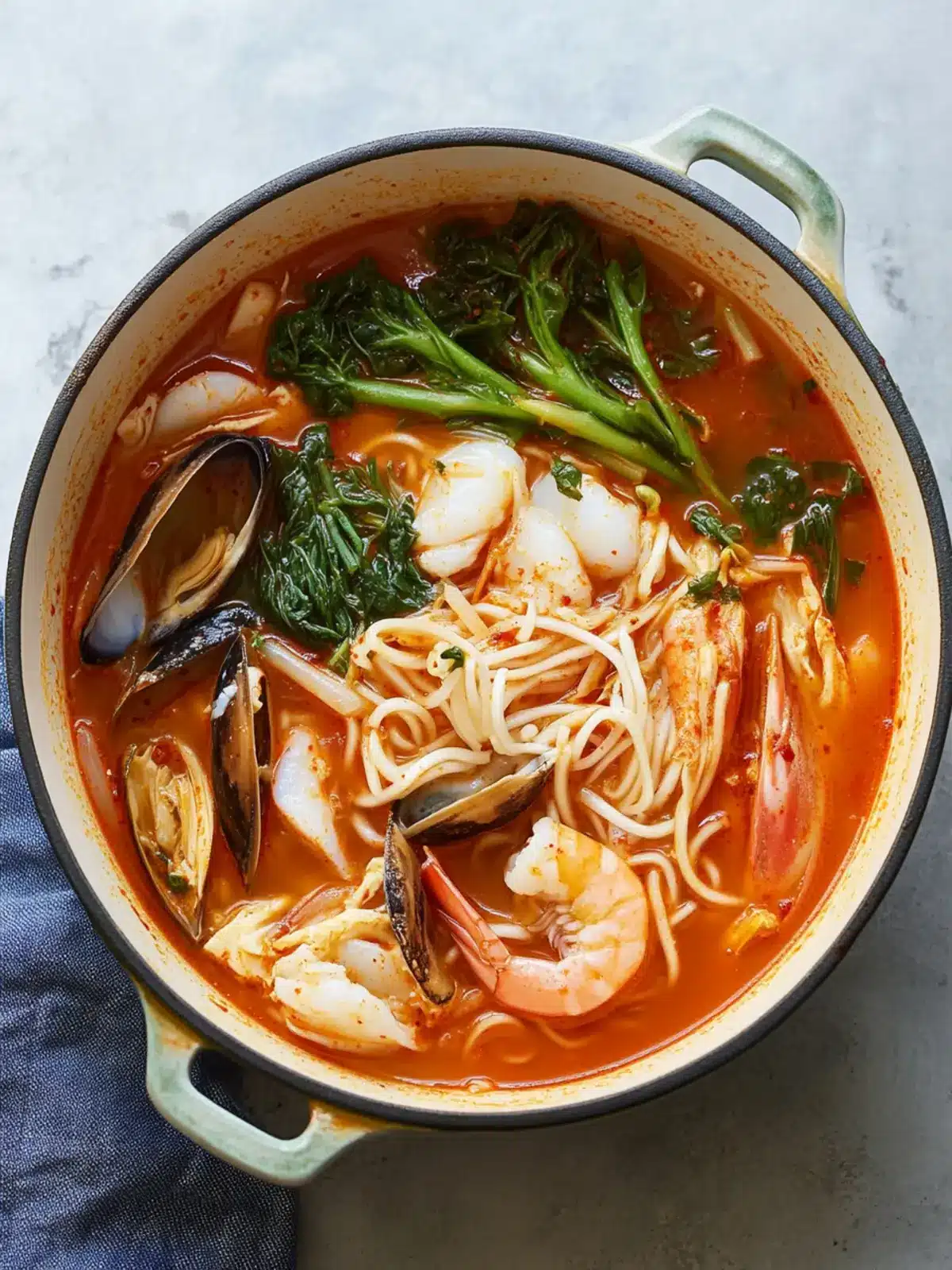
Jjamppong Recipe FAQs
How do I select the best seafood for my Jjamppong?
Absolutely! Choose seafood that looks and smells fresh. Look for shrimp with a firm texture and a clean ocean scent. Clams should be tightly closed, and squid should have a slight sheen. It’s also best to buy from trusted fishmongers who prioritize quality.
Can I store leftover Jjamppong?
Very! You can store Jjamppong in an airtight container in the fridge for up to 3 days. The flavors will deepen as it sits, so it can actually taste even better the next day! Ensure it cools completely before storing to maintain quality.
How do I freeze Jjamppong properly?
Of course! To freeze Jjamppong, let it cool down completely. Then, pour it into airtight freezer-safe containers or bags, making sure to leave some room for expansion. It can last in the freezer for up to 3 months! When you’re ready to eat, thaw it overnight in the fridge and reheat on the stovetop, adding a splash of broth or water.
Why did my seafood become rubbery in the soup?
There’s a simple fix for that! Seafood can become rubbery if overcooked. Aim for just 3-4 minutes of cooking for shrimp and scallops, and add them to the pot early enough to allow for tender cooking but not so early that they dry out. You’ll know they’re done when they turn opaque and curl slightly.
Is Jjamppong safe for people with shellfish allergies?
No, it’s not! Since Jjamppong includes various types of seafood, it’s not recommended for those allergic to shellfish. You can try a vegetarian version by using firm tofu or a mix of vegetables instead of the seafood, utilizing vegetable broth for flavor!
How can I adjust the spice levels in Jjamppong?
The more the merrier! If you’re sensitive to spice, start with less gochujang and gochugaru, and taste as you go. You can always add a little more to adjust to your palate. For a milder version, try incorporating more broth and vegetables, which can help balance the heat without losing the rich flavors of this beloved soup.
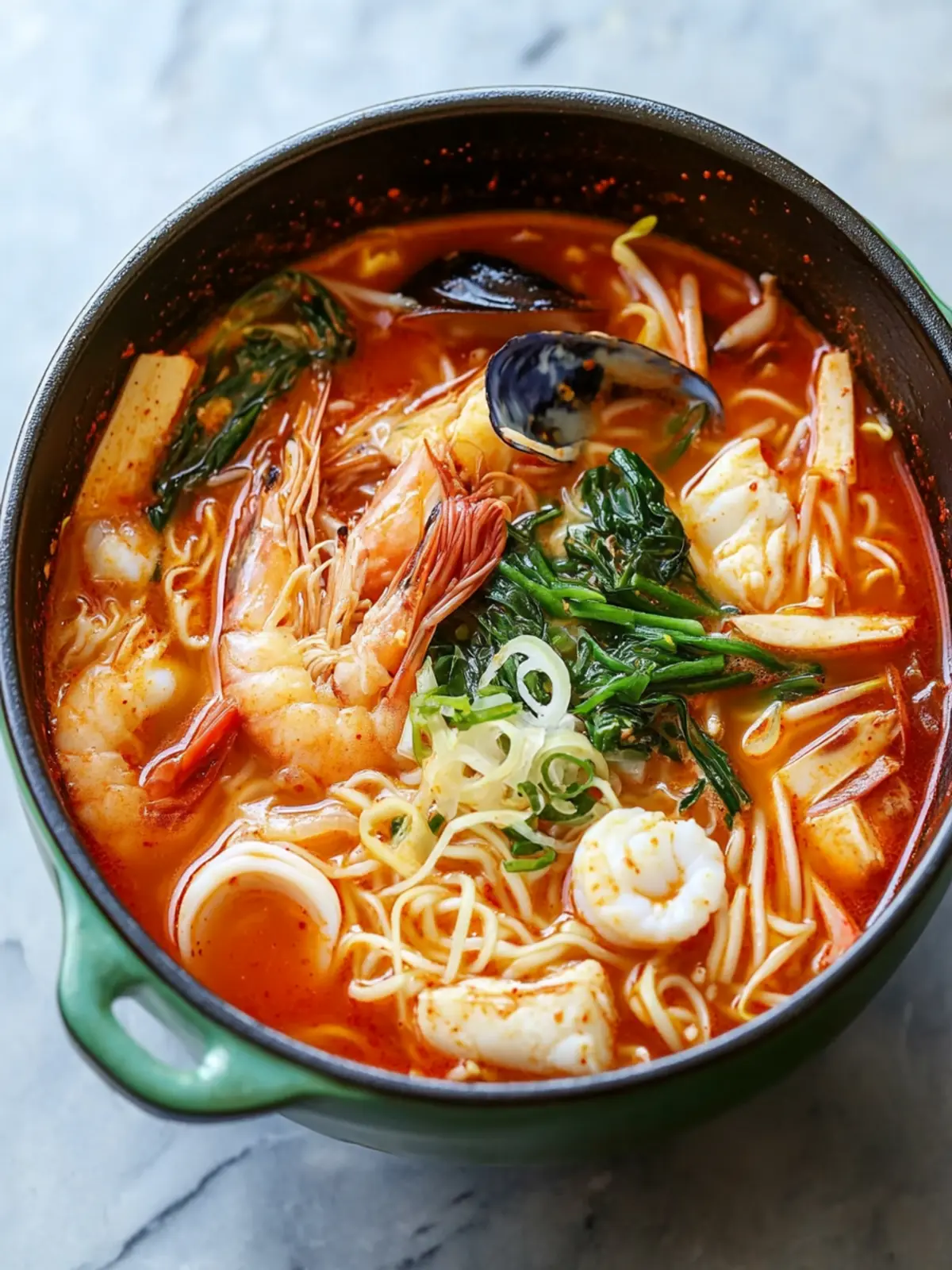
Spice Up Dinner with Jjamppong Korean Seafood Noodle Soup
Ingredients
Equipment
Method
- In a large pot, heat the cooking oil over medium heat. Once warm, add the minced garlic and onion, sautéing until fragrant and slightly golden, about 2-3 minutes.
- Toss in the shrimp, Manila clams, squid, and bay scallops. Stir gently to combine, letting the seafood mingle and soak up those lovely garlic and onion flavors for about 3-4 minutes.
- Stir in the gochujang and gochugaru. Mix well to coat the seafood in the vibrant red-orange paste, allowing the aroma to fill your kitchen—this will take around 1 minute.
- Carefully pour in the chicken broth and bring the mixture to a bubbling boil. Once boiling, reduce the heat and let it simmer for about 10 minutes.
- Add the napa cabbage and bok choy to the pot. Cook until they are wilted and tender, about 3-5 minutes.
- Finally, add the Korean fresh noodles along with soy sauce and salt to taste. Stir and cook until the noodles are tender, which should take about 3-5 minutes.
- Just before serving, gently stir in the scallions to add a fresh burst of flavor.