
As I bit into a bowl of steaming Japchae, the silky strands of sweet potato noodles danced with vibrant vegetables and tender beef, creating a symphony of flavors that instantly transported me to the bustling streets of Seoul. This delightful Korean stir-fried dish, known for its beautiful colors and Umami-rich taste, is surprisingly simple to prepare, making it a perfect weeknight dinner or a star at your next gathering. When I first tackled this recipe, I was amazed at how quickly it came together—less than an hour, with just a bit of marinating time.
Whether you’re craving a comforting meal or looking to impress your friends with a restaurant-quality dish, Japchae ticks all the boxes: it’s effortlessly delicious, wonderfully versatile, and a feast for the eyes. Get ready to elevate your homemade culinary experience with this mouthwatering recipe that will have everyone coming back for seconds!
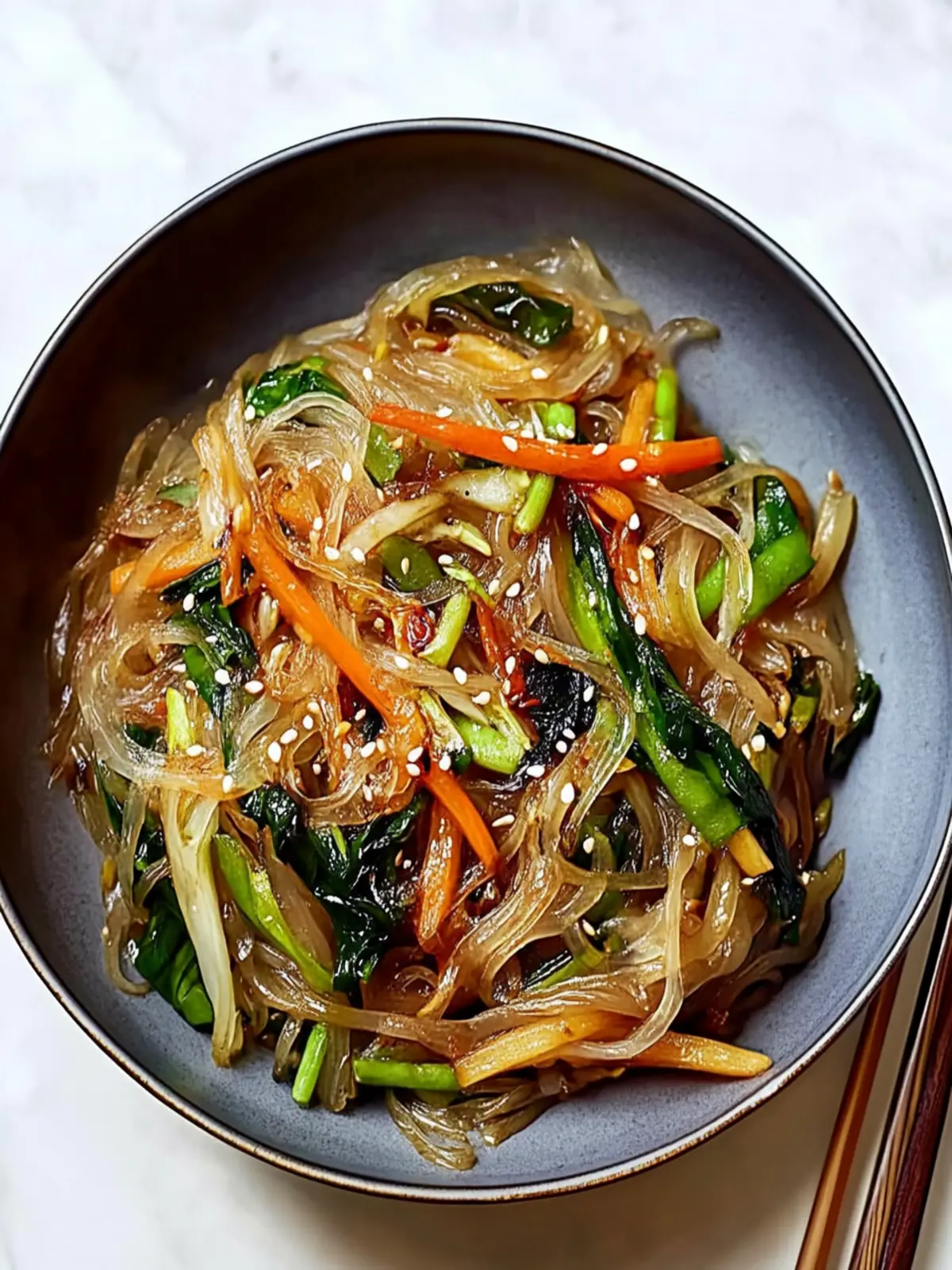
Why is Japchae a must-try dish?
Simplicity: This mouthwatering dish comes together in no time, requiring only basic culinary skills.
Umami Explosion: With savory beef and a medley of vegetables, each bite delivers a satisfying flavor punch.
Versatility: Feel free to swap in your favorite veggies or proteins, making this recipe adaptable for any taste preference.
Crowd-Pleaser: Perfect for family dinners or gatherings, it’s bound to impress everyone at the table.
Healthful Ingredients: Made with nutritious vegetables and sweet potato noodles, you can enjoy a feel-good meal without compromising on taste.
For more fantastic dishes to try, check out our Ultimate Comfort Food Guide!
Japchae Ingredients
• Get ready for a delicious stir-fry experience with these essential ingredients!
For the Marinade
- Soy Sauce – a key ingredient for that umami flavor in our Japchae.
- Mirin – adds a bit of sweetness to balance the savory notes.
- Toasted Sesame Oil – brings a nutty aroma that elevates the entire dish.
- Dark Brown Sugar – adds depth and richness to the marinade.
For the Meat and Veggies
- Boneless New York or Ribeye Steak – tender cuts are perfect for stir-frying.
- Vegetable or Canola Oil – helps to achieve that beautiful sear on the beef.
- Medium Carrot – sliced thinly for a vibrant crunch.
- Yellow Onion – gives a sweet, aromatic base that enhances the dish.
- Fresh Shiitake Mushrooms – their earthy flavor complements the other ingredients beautifully.
- Garlic – adds a fragrant punch and depth to the stir-fry.
- Baby Spinach – wilts perfectly and contributes a vibrant green contrast.
- Medium Scallion (optional) – adds freshness and color to the dish.
For the Noodles
- Dried Korean Sweet Potato Noodles or Sweet Potato Vermicelli – the star of the show that holds all the flavors together!
For Seasoning
- Soy Sauce or Tamari – an extra splash for seasoning the noodles.
- Packed Dark Brown Sugar – enhances sweetness and balances the flavors.
- Kosher Salt – to taste, ensuring all flavors pop.
- Toasted Sesame Oil – a delicious drizzle that ties the dish together.
- Freshly Ground Black Pepper – to add a subtle heat to the mix.
- Toasted White Sesame Seeds – for garnish, adding a delightful crunch and visual appeal.
With these Japchae ingredients ready, you’re all set to whip up a delightful and colorful meal that will impress everyone at your table!
How to Make Japchae
-
Prepare the Marinade: In a mixing bowl, combine the soy sauce, mirin, toasted sesame oil, and dark brown sugar. Stir well and let it set aside to blend the flavors.
-
Slice and Marinate: Thinly slice the boneless steak into strips. Add the sliced beef to the marinade and let it soak for at least 30 minutes, allowing it to absorb the delicious flavors.
-
Cook the Beef: Heat vegetable or canola oil in a large pan over medium-high heat. Stir-fry the marinated beef until it’s cooked through and no longer pink, then remove it from the pan and set aside.
-
Stir-Fry Vegetables: In the same pan, toss in the sliced carrot and onion. Stir-fry until they begin to soften, which should take about 3-4 minutes.
-
Add Mushrooms and Garlic: Next, add the fresh shiitake mushrooms and minced garlic to the pan. Continue stirring until the mushrooms are tender, about 3-5 minutes.
-
Incorporate Spinach: Add the baby spinach and chopped scallion (if using) into the mix. Cook until the spinach wilts down, which will take just a couple of minutes.
-
Prepare the Noodles: Cook the Korean sweet potato noodles according to the package instructions. Once ready, drain and rinse them under cold water to stop the cooking process.
-
Mix it all Together: In the pan with the stir-fried vegetables, combine the cooked noodles, additional soy sauce, brown sugar, kosher salt, toasted sesame oil, and black pepper. Toss everything together until well mixed.
-
Serve and Garnish: Plate the Japchae and top it with the cooked beef. For an extra touch, sprinkle toasted white sesame seeds on top for flavor and presentation.
Optional: Add a few slices of fresh cucumber for a refreshing crunch on top.
Exact quantities are listed in the recipe card below.
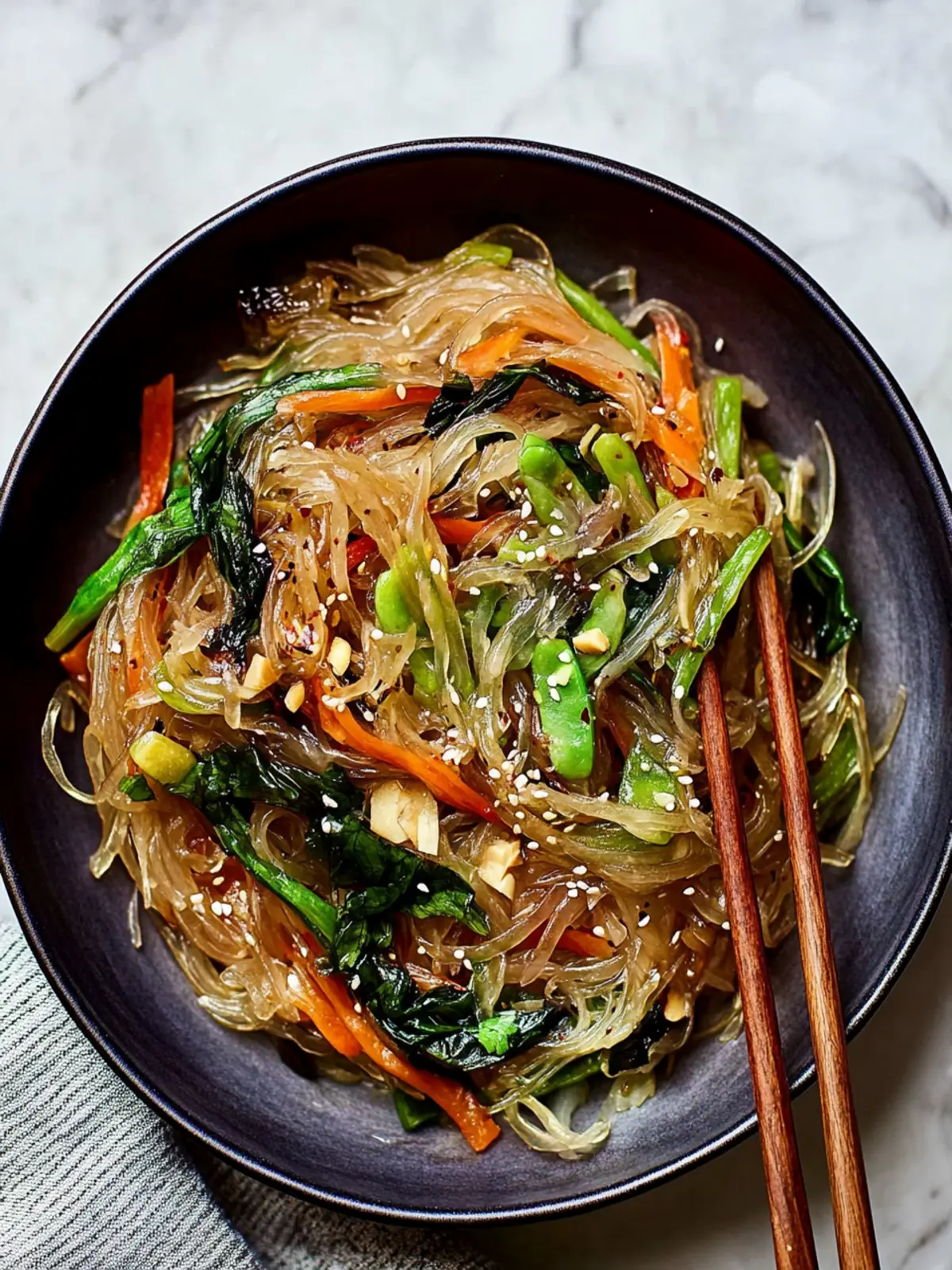
Japchae Variations & Substitutions
Feel free to play around with these flavors and ingredients to make Japchae your own!
-
Vegetarian: Swap beef for firm tofu or tempeh, marinating the tofu to soak up those rich flavors. This makes for a filling and satisfying meal.
-
Gluten-Free: Use gluten-free tamari instead of soy sauce for a similar flavor without the gluten. Your taste buds won’t miss a beat!
-
Heat it Up: Add sliced red chili peppers or a dollop of gochujang for a spicy kick that elevates the dish to new levels. Spice lovers, rejoice!
-
Extra Veggie Power: Incorporate bell peppers, zucchini, or snap peas for even more color and nutrition, adding a lovely crunch to the dish. The more, the merrier!
-
Noodle Twist: Try using rice noodles instead of sweet potato noodles for a different texture while still getting that delightful stir-fry experience. It’s all about personal preference!
-
Nutty Flavor: Sprinkle some crushed peanuts or cashews on top for an added layer of crunch and a nutty finish, enhancing the dish’s flavor profile.
-
Citrus Zing: Add a squeeze of lime juice while serving for a refreshing brightness that complements the savory flavors beautifully. It’s a game changer!
-
Protein Swap: Try grilled shrimp or chicken for a different protein option while keeping the same vibrant flavors and textures. Customize it to satisfy your cravings!
Make Ahead Options
Preparing Japchae in advance is a fantastic time-saver for busy weeknights! You can marinate the beef up to 24 hours ahead—simply combine your marinade ingredients and let the sliced steak soak in it overnight to enhance the flavors. Additionally, you can chop all your vegetables (carrots, onion, garlic, and mushrooms) and store them in the refrigerator for up to 3 days. This way, when you’re ready to whip up your meal, all you have to do is stir-fry the ingredients and cook the sweet potato noodles. For the best quality, keep your noodles separate until serving to maintain their texture. Just toss everything together just before serving, and you’ll have a vibrant, delicious Japchae ready to enjoy without the fuss!
How to Store and Freeze Japchae
Fridge: Store leftover Japchae in an airtight container in the refrigerator for up to 3 days. Reheat gently on the stovetop or in the microwave to maintain its texture.
Freezer: For longer storage, freeze portions of Japchae in freezer-safe containers for up to 2 months. Thaw overnight in the fridge before reheating.
Reheating: When ready to enjoy, reheat in a pan over low heat with a splash of water or broth to help revive the noodles and maintain moisture.
Airtight Containers: Ensure your Japchae is well-sealed to prevent freezer burn and retain its delightful flavors.
Tips for the Best Japchae
-
Marinating Time Matters: Allow the beef to marinate for at least 30 minutes to infuse it with flavor. Don’t rush this step!
-
Slice Thinly: Cut the steak into thin strips for quicker cooking and better absorption of flavors. Uniformity is key for even cooking.
-
Heat Control: Stir-fry over medium-high heat. If the heat is too low, the beef can stew instead of sear, losing its tenderness.
-
Don’t Overcrowd the Pan: Cook in batches if necessary to prevent steaming. The veggies should have space to soften while maintaining a slight crunch.
-
Toss Gently: When combining noodles and veggies, gently toss to avoid breaking the sweet potato noodles. You want them to remain intact for that perfect Japchae texture!
What to Serve with Japchae with Beef?
Elevate your dining experience by pairing this colorful Korean stir-fry with delightful accompaniments that enhance its rich flavors.
-
Steamed Jasmine Rice: A fragrant and fluffy canvas that soaks up the savory sauce, allowing every bite of Japchae to shine.
-
Korean Pickled Radish (Danmuji): These vibrant, tangy slices provide a crisp contrast to the tender beef and noodles, stimulating your palate.
-
Refreshing Cucumber Salad: The cool crunch of this salad cuts through the richness of the dish, adding a refreshing element to each mouthful. Think of it as a light intermission between bites.
-
Spicy Kimchi: A fermented staple that brings depth and a spicy kick, complementing the sweet and savory notes of the Japchae beautifully.
-
Hot and Sour Soup: The contrasting flavors wake up your taste buds, making it an exhilarating side that works beautifully with the stir-fried noodles.
-
Soju or Korean Beer: These beverages provide a perfect pairing with their clean profiles, elevating your overall dining experience and bringing the meal together.
-
Mango Sticky Rice: For a sweet ending, this dessert balances the savory meal with its creamy coconut flavor and tender sticky rice, creating a lovely finale to your dining experience.
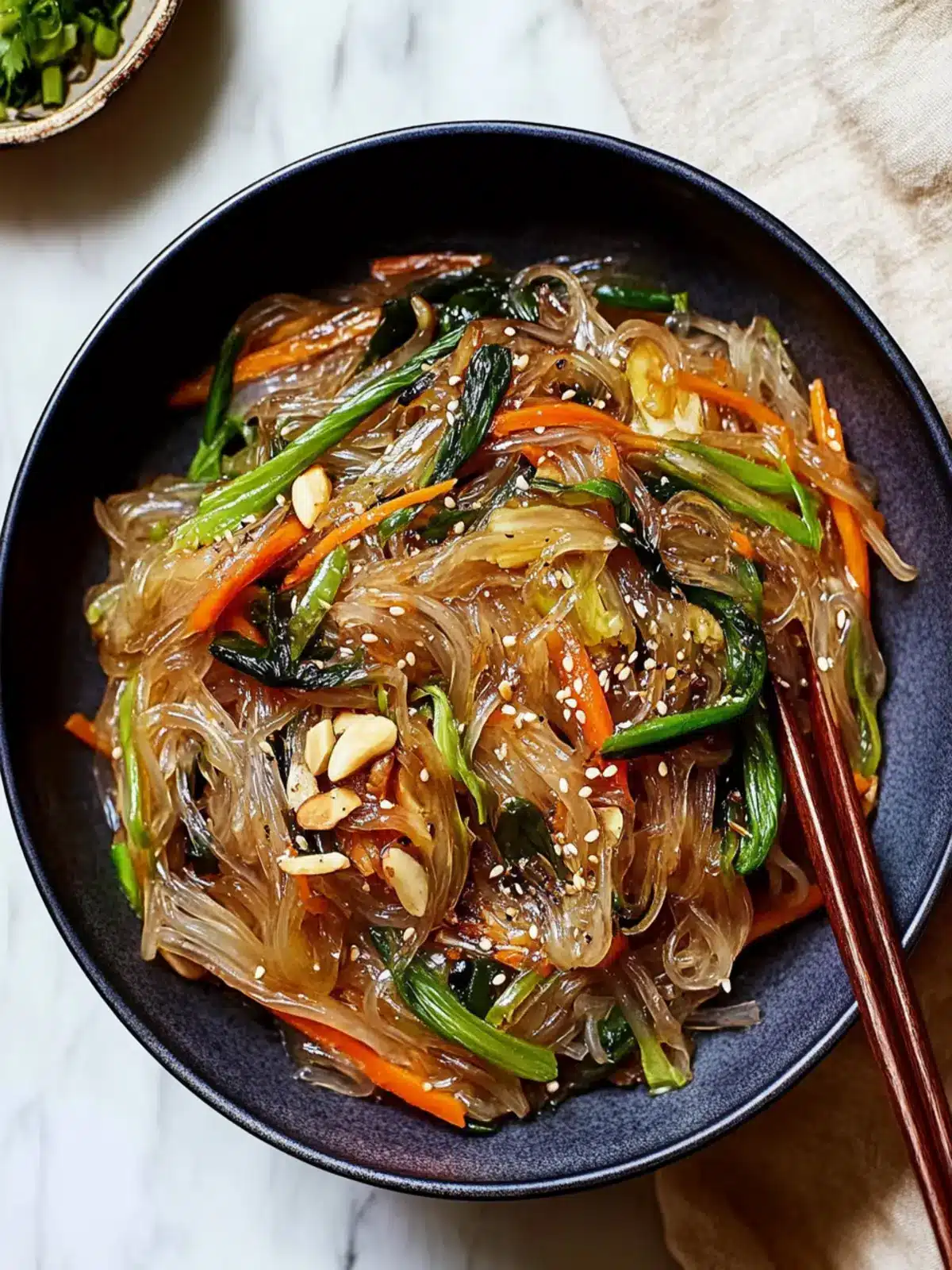
Japchae with Beef Recipe FAQs
What should I look for when choosing my beef for Japchae?
Absolutely! For the best results, I recommend using tender cuts like boneless New York or ribeye steak. Look for steaks with a good amount of marbling, as this fat will render during cooking, enhancing flavor and tenderness. The meat should feel firm and not have any dark spots, indicating freshness.
How do I store leftover Japchae?
Very simply! Store any leftover Japchae in an airtight container in the refrigerator for up to 3 days. When reheating, I suggest using a pan over low heat to maintain the texture of the noodles. A splash of water can help restore moisture—no one likes dry noodles!
Can I freeze Japchae for later?
Yes, you can! To freeze Japchae, portion it into freezer-safe containers, ensuring they’re well-sealed to avoid freezer burn. It will stay fresh for up to 2 months. When you’re ready to enjoy it, just thaw it overnight in the fridge before reheating. This way, you avoid any texture changes that can occur with quick thawing methods.
What if my noodles end up sticky when cooking?
This happens sometimes! To avoid sticky noodles, make sure to rinse them thoroughly under cold water after boiling and then toss them in a bit of oil before mixing with your stir-fried ingredients. If they still stick together while cooking, add a small splash of water to loosen them up while stirring.
Are there any dietary considerations for Japchae?
Definitely! If you’re cooking for someone with dietary restrictions, consider using gluten-free tamari instead of regular soy sauce for a gluten-free option. Also, be sure to wash all veggies thoroughly to avoid any allergens. Plus, if making it for pets, be cautious as certain ingredients like garlic can be harmful to them.
How can I make Japchae vegetarian?
To create a delicious vegetarian version of Japchae, simply replace the beef with tofu or your favorite plant-based protein. For an extra nutrient boost, consider adding more colorful veggies like bell peppers or zucchini. Just marinate the tofu similarly to the beef for maximum flavor, and follow the same cooking instructions!
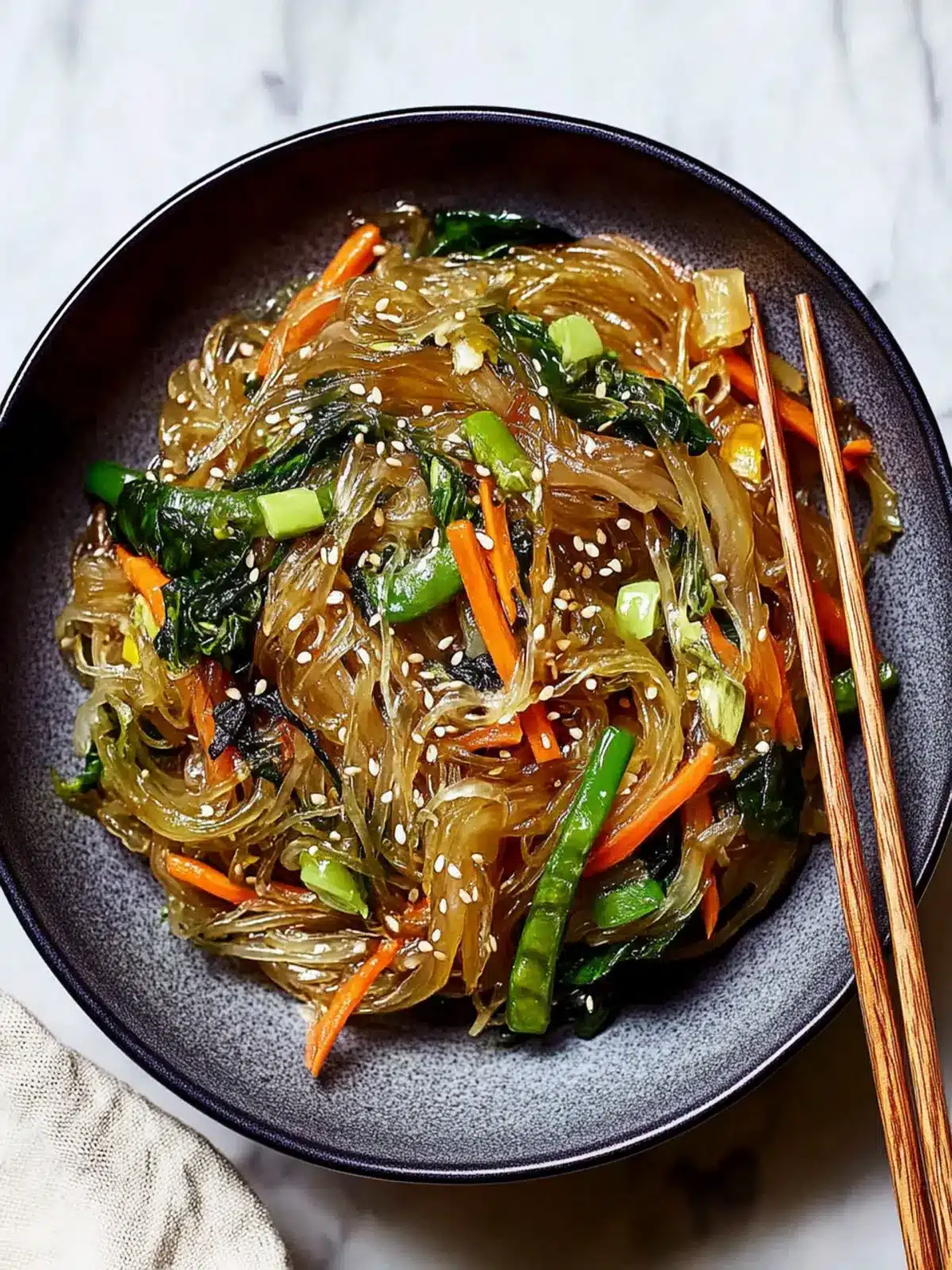
Savory Japchae: Feel-Good Stir-Fry with Tender Beef Delight
Ingredients
Equipment
Method
- In a mixing bowl, combine the soy sauce, mirin, toasted sesame oil, and dark brown sugar. Stir well and let it set aside to blend the flavors.
- Thinly slice the boneless steak into strips. Add the sliced beef to the marinade and let it soak for at least 30 minutes.
- Heat vegetable or canola oil in a large pan over medium-high heat. Stir-fry the marinated beef until cooked through, then remove and set aside.
- In the same pan, toss in the sliced carrot and onion, stir-frying until they begin to soften, about 3-4 minutes.
- Add the fresh shiitake mushrooms and minced garlic to the pan, stirring until mushrooms are tender, about 3-5 minutes.
- Add the baby spinach and chopped scallion, cooking until the spinach wilts down, about 2 minutes.
- Cook the Korean sweet potato noodles according to package instructions. Once ready, drain and rinse under cold water.
- In the pan with the stir-fried vegetables, combine the cooked noodles, additional soy sauce, brown sugar, kosher salt, sesame oil, and black pepper, tossing well.
- Plate the Japchae, top it with the cooked beef, and sprinkle toasted white sesame seeds on top.