
There’s a burst of excitement when you step into the kitchen, especially on a cozy weeknight. The thought of whipping up a dish that marries the bold flavors of Korean cuisine with the comforting embrace of pasta is simply irresistible. Enter my Creamy Korean Ssamjang Pasta, a delightful fusion that transformed a routine dinner into an unforgettable experience.
As the rich umami of ssamjang, a traditional fermented soybean paste, mingles with crisp pork belly and creamy sauce, this dish brings a harmonious balance of spice and comfort to your table. Imagine sitting down after a long day, savoring each bite topped with a luscious poached egg and fresh green onions—it’s pure culinary magic! Whether you’re looking for a new weeknight staple or wanting to impress dinner guests, this easy-to-make recipe is sure to become a favorite. Let’s dive into creating a bowl of joy that will awaken your taste buds and leave you craving more!
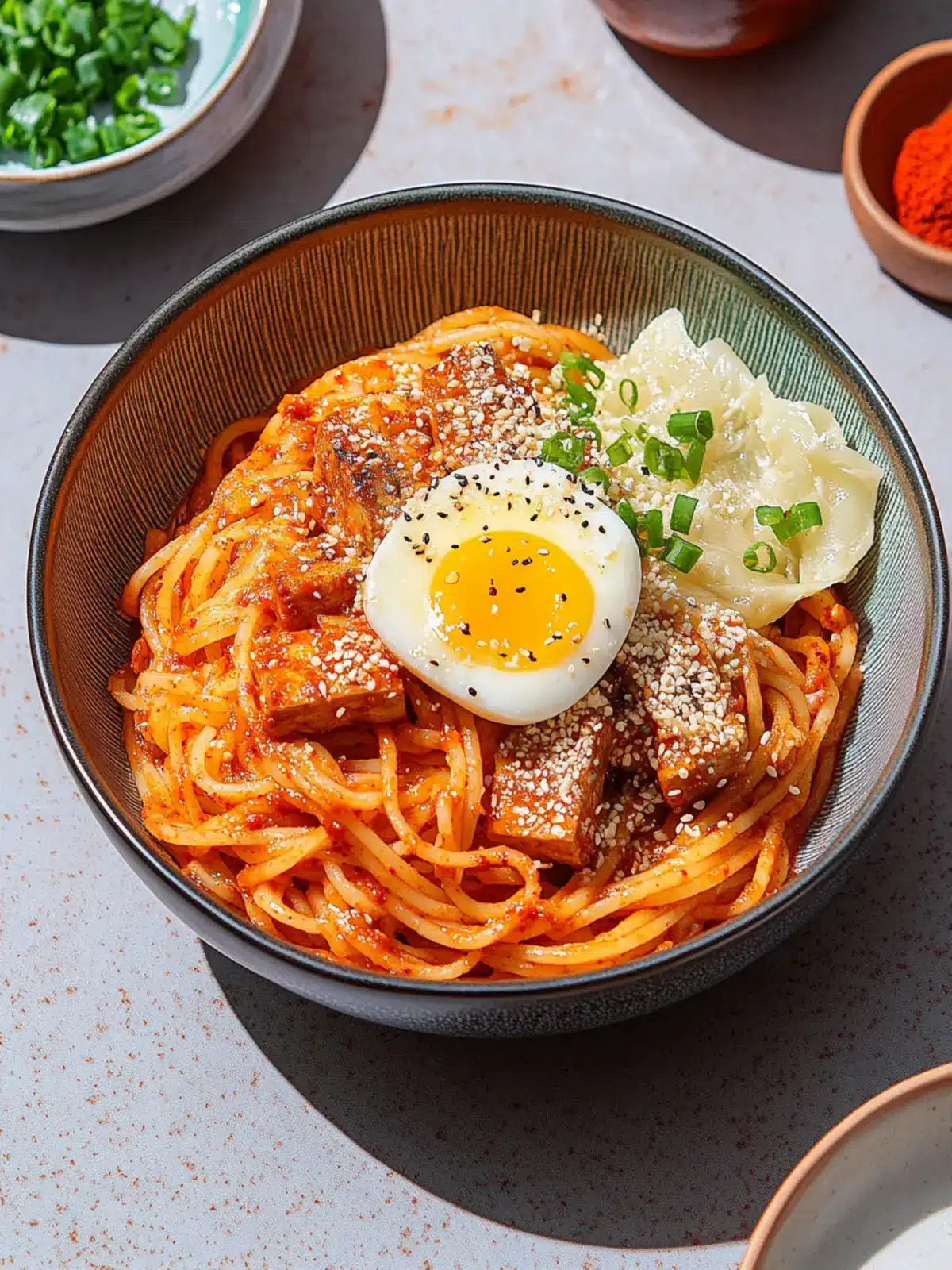
Why is Korean Ssamjang Pasta a must-try?
Unique Fusion: This recipe brilliantly combines Korean and Italian flavors, offering a fresh take on traditional pasta dishes.
Bold Umami: The ssamjang infuses your pasta with deliciously spicy and savory notes, tantalizing your taste buds in every bite.
Easy to Adapt: With simple substitutions like chicken or tofu, you can easily tailor this dish to fit your dietary needs.
Quick Weeknight Dinner: Ready in under 30 minutes, it’s perfect for busy evenings when you crave something hearty but hassle-free.
Impressive Presentation: Topped with a luscious poached egg and vibrant green onions, it’s as visually appealing as it is delicious.
Crowd-Pleasing: Serve this to friends or family, and you’ll have everyone asking for seconds! Treat yourself to this delightful meal, and explore more unique recipes on the blog!
Creamy Korean Ssamjang Pasta Ingredients
For the Pasta
- Pasta – Choose your favorite shape, be it spaghetti or fettuccine, for the perfect base.
- Salt – Use generously in your boiling water to enhance the pasta’s flavor.
For the Pork Belly
- Pork Belly – This adds a rich, crispy texture; sauté until golden brown for the best results.
- Substitution Note: Chicken or tofu can be used for a lighter option.
For the Sauce
- Ssamjang – The star ingredient that brings umami and a hint of heat to your creamy Korean Ssamjang Pasta.
- Substitution Note: If you can’t find it, gochujang or doubanjiang work well as alternatives.
For the Creaminess
- Parmesan Cheese – Grated for a creamy texture and salty finish.
- Substitution Note: Nutritional yeast renders it dairy-free while still adding flavor.
For the Topping
- Egg – A poached or soft-boiled egg adds richness and makes the dish more indulgent.
- Preparation Note: Ensure the yolk is runny for a delectable contrast.
- Green Onions – Chopped for a fresh and crunchy garnish that lightens the dish.
- Substitution Note: Leeks provide a milder alternative if preferred.
How to Make Korean Ssamjang Pasta
-
Prepare Pasta: Begin by boiling well-salted water in a large pot, then add your favorite pasta shape. Cook according to the package instructions, usually around 8-10 minutes, until al dente. Reserve 1 cup of the starchy pasta water before draining.
-
Cook Pork Belly: In a large skillet over medium heat, add diced pork belly. Sauté for about 5-7 minutes, or until the pieces are crispy and golden brown, bringing out their rich flavors.
-
Make Sauce: Once the pork belly is cooked, stir in the ssamjang along with a splash of reserved pasta water. Mix it well, stirring until you achieve a smooth, creamy sauce that nicely coats the pork.
-
Combine: Add the drained pasta to the skillet, tossing it well with the sauce and adding additional reserved pasta water as needed to ensure the noodles are fully coated and creamy.
-
Serve: Plate your delicious creation, generously topping each serving with grated parmesan cheese, slices of soft-boiled egg, and a sprinkle of chopped green onions for a fresh finish.
Optional: For an extra kick, drizzle with sesame oil before serving.
Exact quantities are listed in the recipe card below.
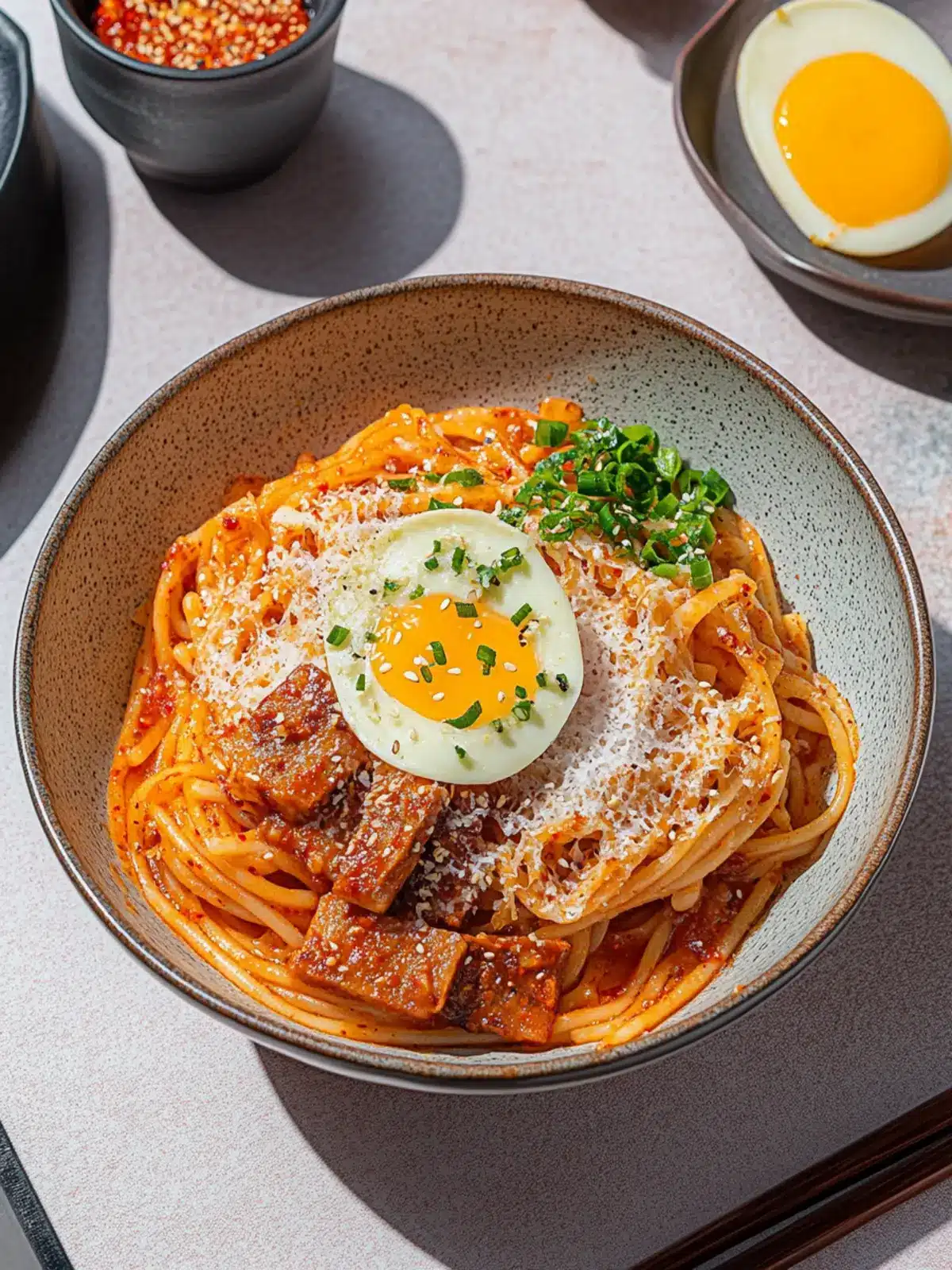
Expert Tips for Korean Ssamjang Pasta
-
Pasta Perfection: Always cook your pasta al dente; overcooking makes it mushy and less enjoyable.
-
Ssamjang Sensitivity: Adjust the ssamjang to your spice preference—some brands can be quite salty, so taste as you go!
-
Water Wisely: Reserve enough pasta water to help adjust the sauce consistency; it’s key for a creamy texture.
-
Texture Triumph: For a rich finish, make sure to add the poached egg right after plating; it enhances flavor and looks stunning!
-
Fresh Garnish: Don’t skip the green onions—they add a delightful crunch and fresh flavor to balance the rich creamy sauce of your Korean Ssamjang Pasta.
What to Serve with Creamy Korean Ssamjang Pasta?
A delightful dinner is just around the corner, and pairing your creamy creation with the right sides can elevate your dining experience.
- Pickled Vegetables: These crunchy, tangy bites are a perfect contrast to the creamy pasta, cleansing the palate between rich flavors.
- Cucumber Salad: A light, refreshing salad with a hint of sesame oil brings brightness and helps balance the dish’s richness.
- Steamed Broccoli: Tender, vibrant broccoli not only adds color but also provides a healthy crunch that complements the creamy sauce beautifully.
- Garlic Bread: Soft, buttery garlic bread is always a crowd-pleaser and makes for a delightful side to soak up any leftover sauce.
- Kimchi: Offering a spicy, tangy kick, traditional fermented kimchi pairs wonderfully, adding depth and texture to your meal.
- Wines: A crisp Sauvignon Blanc or a dry Riesling will enhance the umami flavors of the ssamjang and complement the pork belly nicely.
- Sesame Snap Cookies: For dessert, these sweet and nutty cookies create a delightful end to your meal, balancing the savory notes with a touch of sweetness.
Korean Ssamjang Pasta Variations
Customize your dish with these delightful twists to elevate your creamy Korean Ssamjang Pasta experience!
- Gluten-Free: Use rice noodles or gluten-free pasta for a scrumptious alternative that everyone can enjoy.
- Vegetarian: Swap pork belly for sautéed mushrooms to retain the umami flavor while keeping it plant-based.
- Spicy Kick: Add sliced jalapeños or a sprinkle of red pepper flakes for an exciting heat level that packs a punch!
- Creamy Vegan: Replace parmesan with cashew cream and use a flaxseed egg for a fully vegan version bursting with flavor.
- Nutty Flavor: Incorporate toasted sesame seeds as a topping; they add a delightful crunch and nutty aroma that complements the dish beautifully.
- Colorful Veggies: Toss in vibrant bell peppers or steamed broccoli for added nutrition and a pop of color; it makes every bite visually exciting.
- Citrus Zing: A squeeze of fresh lime or lemon brightens the dish, enhancing the flavors and adding a refreshing twist to each serving.
- Herb-Infused: Experiment with fresh herbs like cilantro or basil for a fragrant touch that lifts the entire dish into new culinary heights!
How to Store and Freeze Korean Ssamjang Pasta
Fridge: Store leftovers in an airtight container for up to 3 days to maintain freshness; reheat in a skillet for best results.
Freezer: Freeze portions in individual containers for up to 1 month; ensure they are well-wrapped to prevent freezer burn.
Reheating: When ready to enjoy, thaw in the fridge overnight and reheat gently on the stovetop, adding a splash of water if needed to loosen the sauce.
Airtight Storage: Always use airtight containers to keep your Korean Ssamjang Pasta tasting delicious and to avoid absorbing other odors from the fridge.
Make Ahead Options
These Creamy Korean Ssamjang Pasta bowls are perfect for meal prep, saving you valuable time on busy weeknights! You can cook the pasta up to 24 hours in advance and toss it with a drizzle of olive oil to prevent sticking. The pork belly can also be sautéed ahead of time; simply refrigerate it for up to 3 days. To put everything together when you’re ready to serve, heat the pork belly and mix in the ssamjang, then combine with the pre-cooked pasta, adding reserved pasta water as needed to achieve the creamy consistency. This way, you’ll enjoy the same rich flavors and comforting textures with minimal effort!
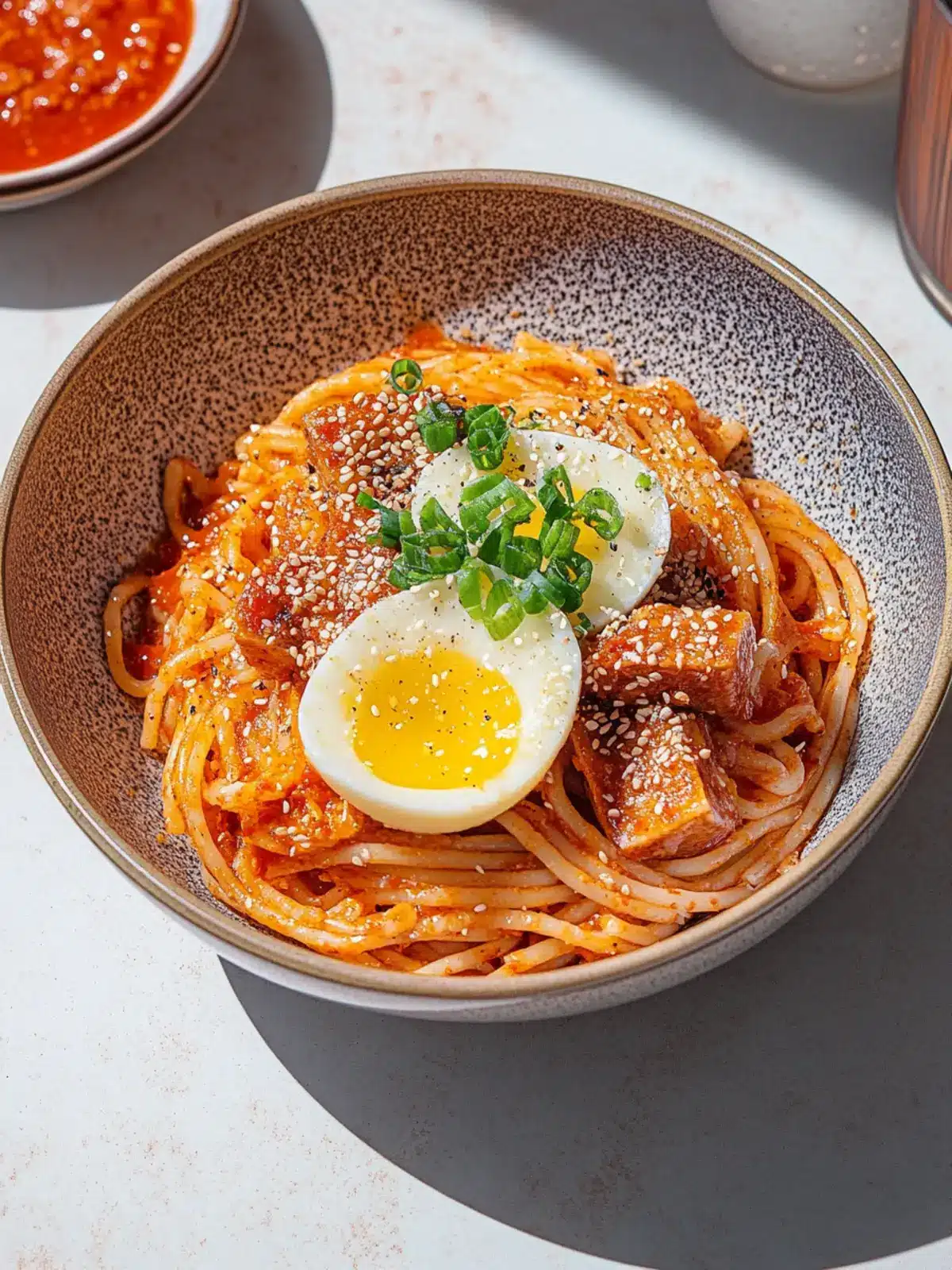
Creamy Korean Ssamjang (쌈장) Pasta Recipe FAQs
What type of pasta should I use for Korean Ssamjang Pasta?
Absolutely! You can use any shape you love, such as spaghetti, fettuccine, or even gluten-free pasta. Just ensure to cook it in well-salted boiling water to boost the flavor throughout.
How should I store leftovers of Korean Ssamjang Pasta?
You can store any leftovers in an airtight container in the fridge for up to 3 days. When it’s time to reheat, I recommend doing so gently in a skillet over low heat to preserve that creamy consistency.
Can I freeze Korean Ssamjang Pasta?
Yes, you absolutely can! To freeze, portion the pasta into airtight containers and keep it in the freezer for up to 1 month. When you’re ready to enjoy, thaw it overnight in the fridge, then reheat on the stovetop with a little extra water to loosen the sauce.
How do I know if my ssamjang is the right spice level?
Great question! Ssamjang can vary in saltiness and heat, so it’s always a good idea to start with a smaller amount and taste as you go. If you want to enhance the flavor without the heat, a hint of soy sauce can balance it out nicely!
Is there a substitute for pork belly in this recipe?
Definitely! If you prefer a lighter option, chicken or tofu can be great alternatives. For chicken, simply sauté it until fully cooked. If using tofu, pan-fry it until crispy for that delightful texture.
Can I serve this to my family if they’re allergic to certain ingredients?
Certainly! This recipe is highly adaptable. You can swap ingredients based on dietary needs—use gluten-free pasta for those with gluten sensitivity or substitute nutritional yeast for parmesan cheese to make it dairy-free. Just be sure to check the labels on any sauces or pre-made ingredients for allergens.
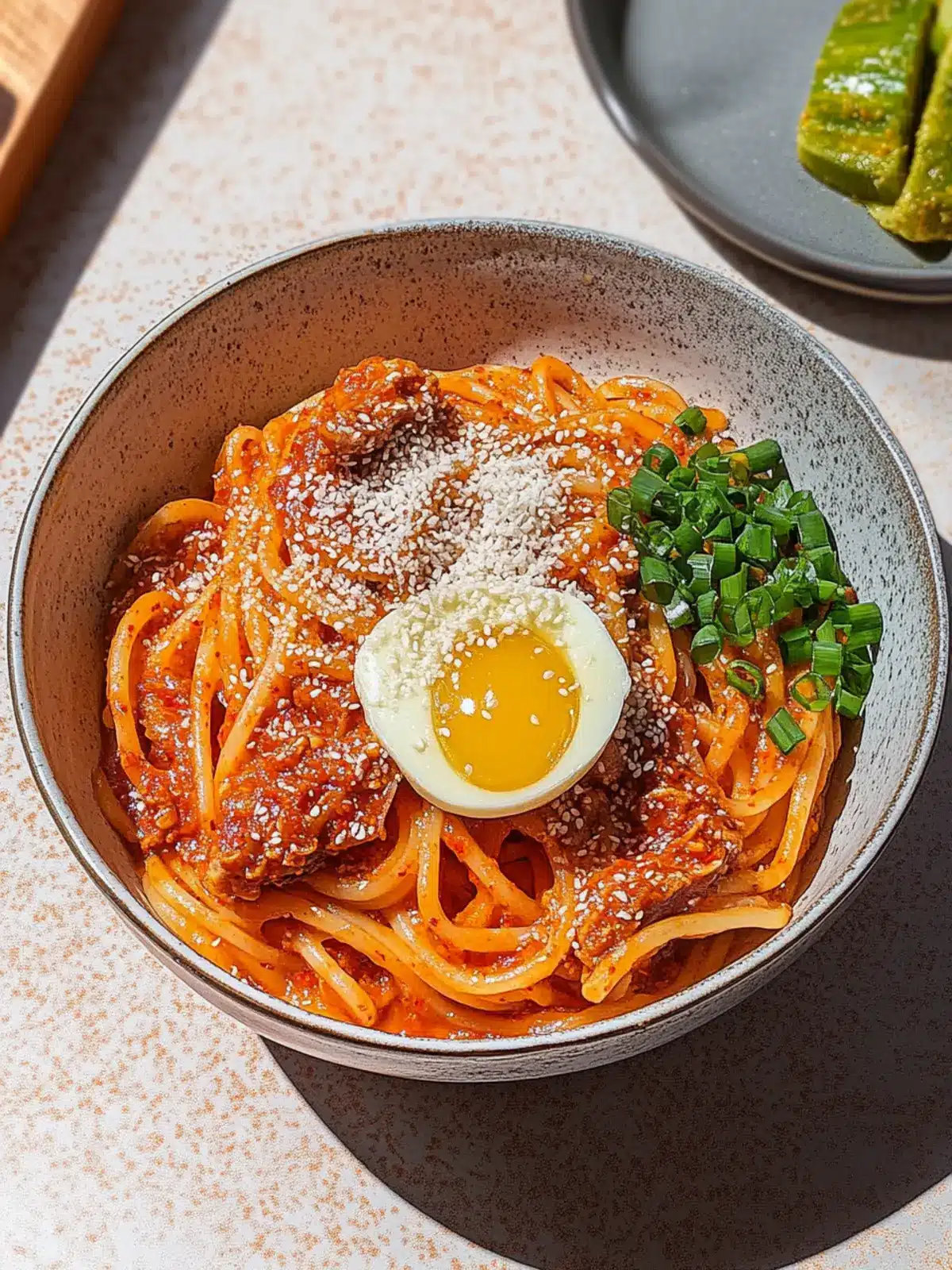
Creamy Korean Ssamjang Pasta: A Flavorful Twist on Comfort Food
Ingredients
Equipment
Method
- Begin by boiling well-salted water in a large pot, then add your favorite pasta shape. Cook according to the package instructions, usually around 8-10 minutes, until al dente. Reserve 1 cup of the starchy pasta water before draining.
- In a large skillet over medium heat, add diced pork belly. Sauté for about 5-7 minutes, or until the pieces are crispy and golden brown.
- Once the pork belly is cooked, stir in the ssamjang along with a splash of reserved pasta water. Stir until you achieve a smooth, creamy sauce.
- Add the drained pasta to the skillet, tossing it well with the sauce and adding additional reserved pasta water as needed.
- Plate your dish, topping with grated parmesan cheese, slices of soft-boiled egg, and chopped green onions.