
There’s a certain thrill that comes with a quick weeknight dinner that doesn’t sacrifice flavor for speed, and my Quick and Easy Korean Beef and Rice is the perfect solution! After a long day, you deserve a meal that ignites your taste buds without demanding hours in the kitchen. Picture this: tender ground beef simmered in a sweet and savory sauce, served over fluffy rice and topped with fresh green onions. The vibrant, mouthwatering aroma instantly draws you in, transforming your dinner table into a trendy Korean bistro.
This dish is not just about convenience; it brings a delightful fusion of flavors that will make you feel like you’re indulging in an elaborate feast. With just a handful of ingredients and ready in a mere 15 minutes, it’s a brilliant way to shake off the monotony of fast food. Whether you’re entertaining friends or simply enjoying a cozy meal at home, this recipe offers a taste of Korean-inspired cuisine that’s as versatile as it is satisfying. Let’s dive in and create something delicious together!
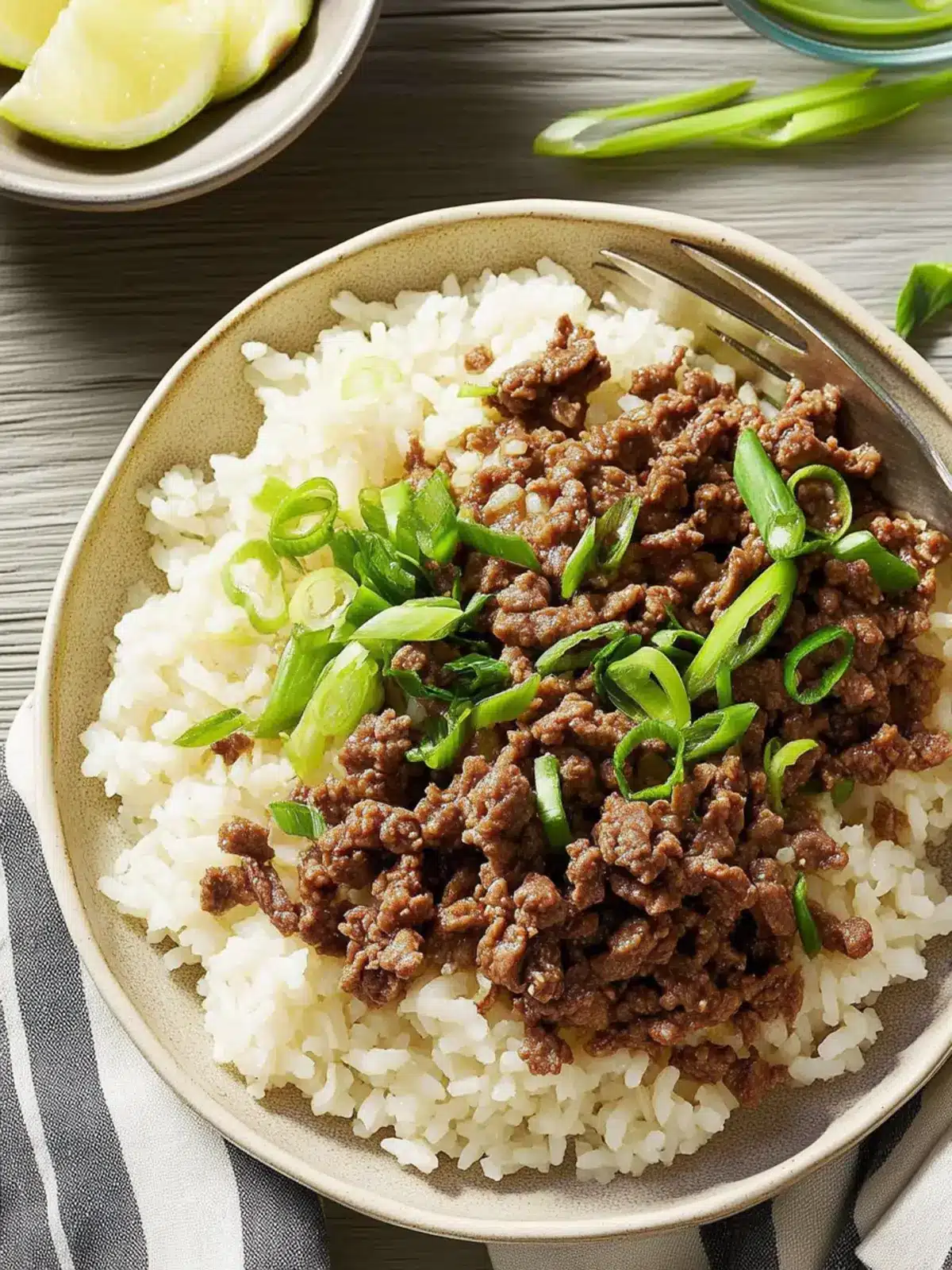
Why is Korean Beef and Rice a must-try?
Speedy Preparation: Ready in just 15 minutes, this dish is the ultimate weeknight lifesaver!
Flavor Explosion: The combination of sweet and savory sauce perfectly balances tender beef over fluffy rice.
Customizable: Easily swap ingredients based on what you have on hand, making it versatile for any pantry.
Family-Friendly: Bursting with flavor yet simple enough to please even the pickiest eaters.
Meal Prep Hero: Ideal for batch cooking, allowing tasty leftovers that are perfect for reheating throughout the week.
Healthy Twist: Packed with protein and can be enriched with veggies for a wholesome meal—explore adding steamed vegetables for extra nutrients!
Korean Beef and Rice Ingredients
• Get ready to whip up a deliciously simple meal!
For the Beef Mixture
• Lean Ground Beef (1 lb) – A source of protein; 90% lean helps keep it light.
• Garlic (3 cloves, minced) – Adds aromatic depth; use garlic powder for a quicker option.
• Brown Sugar (1/4 cup, packed) – Balances the sauce’s savory notes; cane sugar works as a substitute.
• Reduced-Sodium Soy Sauce (1/4 cup) – Infuses umami goodness; opt for reduced-sodium to keep salt levels in check.
• Sesame Oil (2 tsp) – Delivers a nutty aroma; canola oil can be used if sesame isn’t available.
• Ground Ginger (1/4 tsp) – Provides a warm spice; fresh ginger (1/2 tsp) brightens the mixture.
• Crushed Red Pepper Flakes (1/4 tsp) – Adds a mild heat; adjust according to your taste or leave it out.
• Pepper (1/4 tsp) – Enhances seasoning; nothing else needed here!
For Serving
• Hot Cooked Brown Rice (2-2/3 cups) – Forms the base; switch to white or jasmine rice if preferred.
• Green Onions (3, thinly sliced) – Adds color and freshness; chives or shallots can be great alternatives.
Enjoy your flavorful journey with this Korean Beef and Rice recipe!
How to Make Korean Beef and Rice
- Cook the Beef: In a large skillet, heat over medium and add the ground beef with minced garlic. Stir and cook for 6-8 minutes until the beef is no longer pink, breaking it into crumbles.
- Drain Fat: Carefully drain any excess fat from the skillet to keep the dish light and prevent greasiness.
- Mix Sauce: In a small bowl, combine brown sugar, soy sauce, sesame oil, ground ginger, red pepper flakes, and black pepper. Stir well to blend all the flavors.
- Combine: Pour the sauce mixture into the cooked beef in the skillet. Stir thoroughly and heat through for about 2-3 minutes, allowing the flavors to meld.
- Serve: Spoon the beef mixture generously over bowls of hot cooked rice, and sprinkle with sliced green onions for a pop of freshness.
Optional: Add a side of steamed vegetables like broccoli for extra nutrition and color!
Exact quantities are listed in the recipe card below.
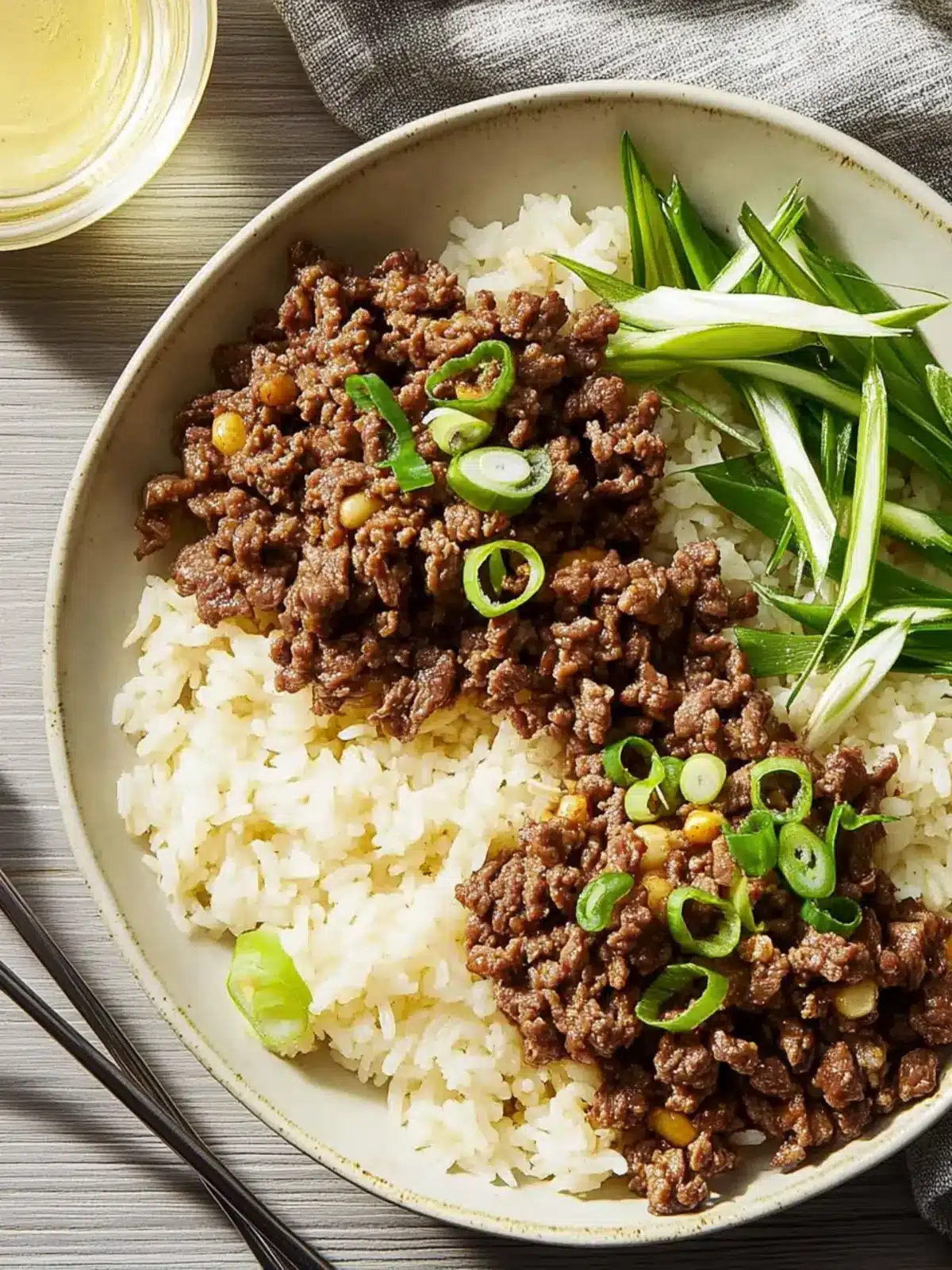
Make Ahead Options
These Korean Beef and Rice are perfect for meal prep enthusiasts! You can prepare the beef mixture up to 3 days in advance, storing it in an airtight container in the refrigerator for optimal freshness. Simply cook the ground beef and mix it with the sauce, then let it cool before refrigerating. For best quality, reheat the mixture gently on the stove for 5-7 minutes before serving, ensuring it’s heated through. The rice can also be made ahead and stored separately in the refrigerator for up to 4 days; just reheat it in the microwave or on the stovetop with a splash of water. By prepping ahead, you’ll have a delicious meal ready to enjoy with minimal effort—perfect for busy weeknights!
Korean Beef and Rice Variations
Feel free to get creative with this recipe—your kitchen, your rules! The possibilities are endless.
- Lean Proteins: Swap ground beef for ground turkey or chicken for a lighter alternative.
- Vegan Delight: Use crumbled tempeh or tofu instead for a plant-based twist that still absorbs the flavorful sauce.
- Sauce Booster: Mix in a tablespoon of gochujang for an authentic kick of spice and depth.
- Vegetable Medley: Toss in diced bell peppers or shredded carrots during the cooking process for added flavor and nutrients. It’s a delicious way to incorporate more veggies!
- Rice Variety: Experiment with using quinoa or cauliflower rice as a base for a healthier, gluten-free option.
- Herb Infusion: Add fresh cilantro or basil just before serving for bright, aromatic notes that elevate the dish beautifully.
- Nutty Crunch: Sprinkle sesame seeds or chopped peanuts on top for a delightful crunch and extra texture.
- Zesty Finish: Drizzle a bit of lime or lemon juice over the top right before serving for a refreshing zing that complements the savory flavors.
Expert Tips for Korean Beef and Rice
-
Fat Management: Drain excess fat from the beef after cooking to keep your dish light and delicious, avoiding a greasy texture.
-
Saucier Preference: If you love a saucy dish, feel free to double the sauce ingredients. Many find the flavor depth enhanced by extra sauce.
-
Veggie Boost: For a healthy twist, add steamed vegetables like broccoli or snap peas into the beef mixture; it increases nutrition and adds color.
-
Rice Choices: For variety, switch between brown rice, white rice, or jasmine rice based on your preference, each offering a different texture.
-
Adjusting Spice: Tailor the crushed red pepper flakes to your taste; if you prefer less heat, start with a small pinch and adjust as needed.
Embrace these tips while making your Korean Beef and Rice for a delightful, flavorful experience!
How to Store and Freeze Korean Beef and Rice
Fridge: Store leftovers in an airtight container for up to 3-4 days. Reheat on the stove or microwave until heated through, ensuring the beef remains tender.
Freezer: For longer storage, freeze the beef mixture in a freezer-safe container for up to 3 months. Thaw overnight in the fridge before reheating.
Reheating: When ready to eat, warm the beef in a skillet over low heat with a splash of water or broth to revive moisture. Serve over freshly cooked rice for best results.
Separate Storage: If possible, store the beef and rice separately to maintain texture and flavor after reheating.
What to Serve with Korean Beef and Rice?
Transform your meal into a delightful feast with these perfect pairings that complement the rich flavors of Korean Beef and Rice.
-
Steamed Broccoli: This vibrant green vegetable adds a crisp texture and balances the savory richness of the beef.
-
Kimchi: Offering a spicy crunch, kimchi contrasts beautifully with the sweet-savory sauce, enhancing the Korean dining experience.
-
Sesame Cucumber Salad: A refreshing side, this salad brings bright notes and a juicy crunch that works wonders with the dish’s warmth.
-
Fried Egg: Topping your beef and rice with a sunny-side-up egg adds creaminess and a delightful richness that elevates each bite.
-
Miso Soup: The umami flavors of miso soup create a traditional Korean side to round out your meal, making it comforting and satisfying.
-
Sautéed Spinach: Lightly seasoned sautéed spinach offers a nutritious boost and a tender texture that complements the hearty beef.
-
Glass Noodles: Sweet potato glass noodles tossed in soy sauce and sesame oil provide a chewy texture and a unique twist alongside the rice.
-
Chilled Soba Noodles: These refreshingly cool noodles can be drizzled with sesame sauce, delightfully contrasting with the warm beef and rice.
-
Boba Tea: For a touch of fun, pair your meal with a bubble tea; its creamy sweetness beautifully balances the savory elements of the dish.
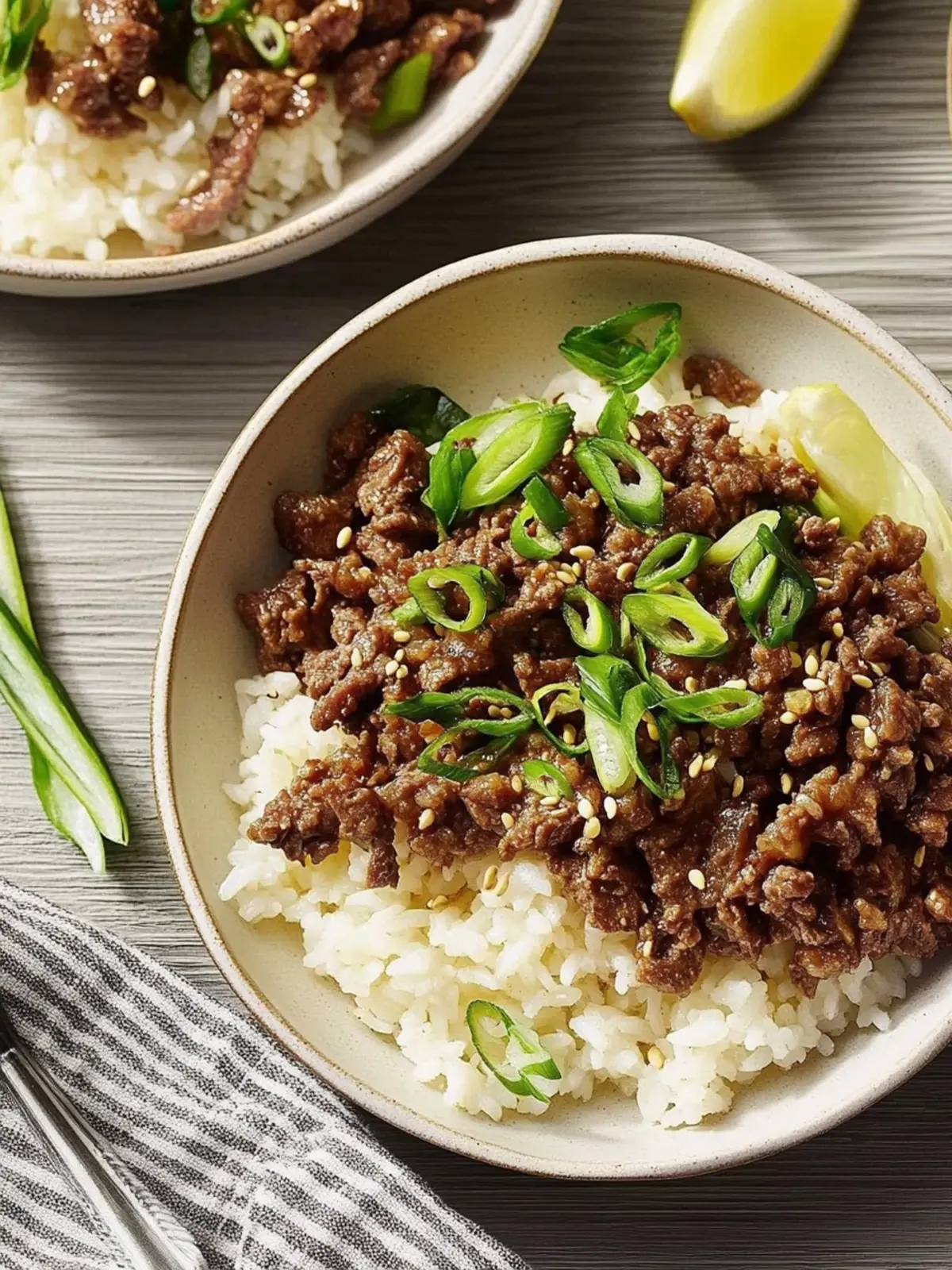
Korean Beef and Rice Recipe FAQs
How do I select ripe ingredients for the recipe?
Absolutely! When choosing ground beef, aim for 90% lean or higher to keep your dish flavorful yet light. For garlic, select firm, plump cloves without any dark spots. The brown sugar should be packed to ensure a rich sweetness, while the soy sauce should be low in sodium if you’re watching your salt intake. Fresh green onions should be vibrant green—look for firm stalks without wilting.
What’s the best way to store leftovers?
Very! Store any leftovers in an airtight container in the fridge for up to 3-4 days. Reheat on the stove or in the microwave until heated thoroughly. If you’re short on time, the microwave works wonders! Just ensure the beef is steaming hot throughout before serving.
Can I freeze the Korean Beef and Rice for later?
Yes, indeed! For freezing, place the beef mixture in a freezer-safe container for up to 3 months. Allow it to cool completely before sealing. When you’re ready to enjoy it again, just thaw it overnight in the fridge. Reheat on low in a skillet with a splash of water or broth to keep it moist and serve over fresh rice for the best experience.
What if my beef is too greasy?
No worries! If your beef turns out greasy, the best approach is to drain the excess fat after cooking. Simply tilt the skillet slightly and use a spoon or ladle to scoop out the fat. Alternatively, you can let it cool slightly and soak up the grease with a paper towel. This will help ensure your dish remains light and enjoyable.
Are there any dietary considerations for Korean Beef and Rice?
Absolutely! This dish can be easily modified for certain dietary needs. If you’re looking to keep it lean, you could substitute ground turkey or chicken. For a vegetarian option, crumbled tofu can replace the beef, and you’ll want to increase the flavor in your sauce. If allergies are a concern, take care with soy sauce, as it contains gluten; look for a gluten-free alternative. Enjoy it worry-free!
How can I enhance the flavor of my dish?
Very much! A fantastic way to elevate the dish is to add a splash more sesame oil or throw in some steamed vegetables like broccoli or snap peas. These additions not only enhance flavor but also add color and nutrients. Also, doubling the sauce ingredients can create a richer base—lots of family favorites that way!
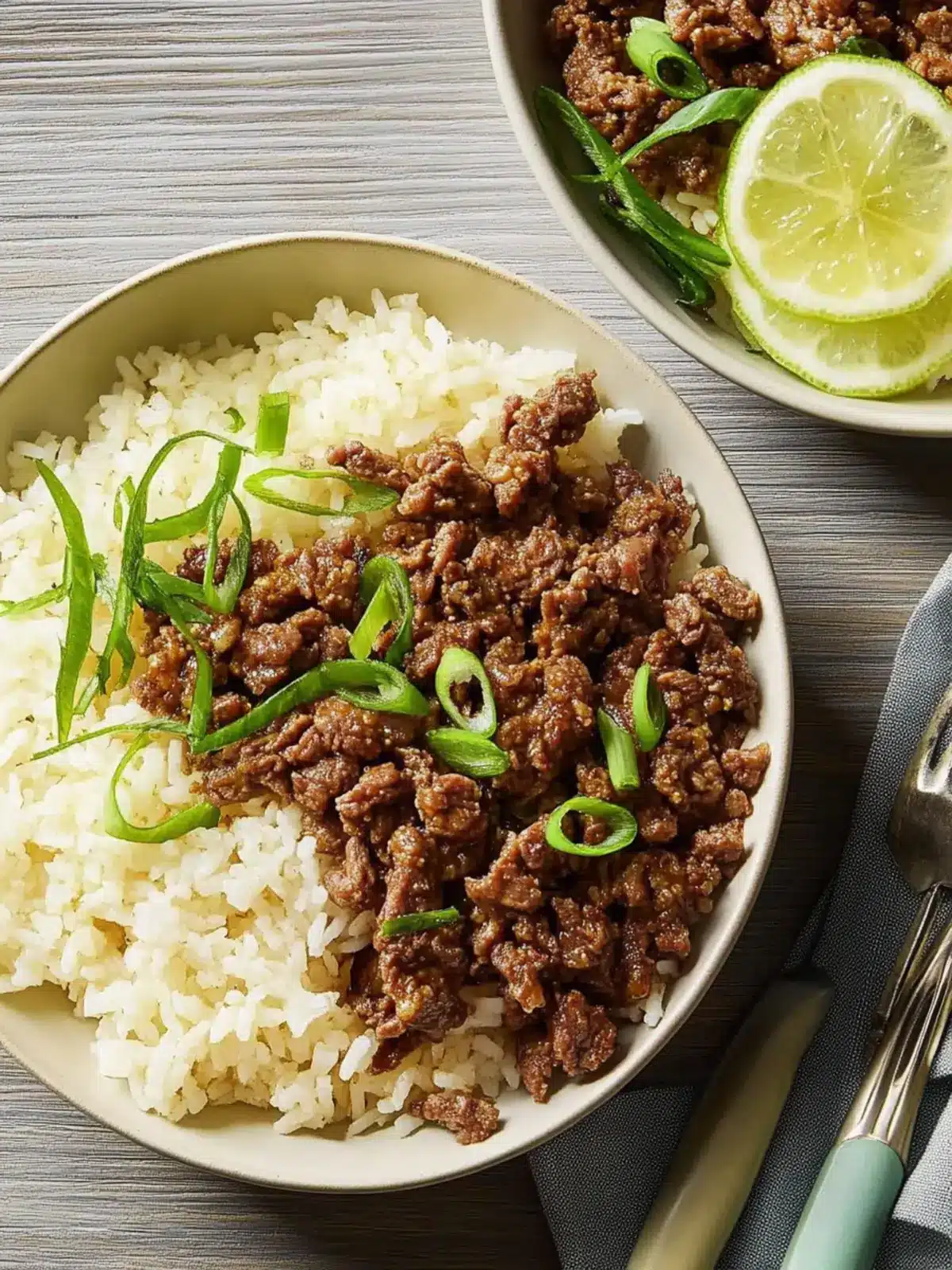
Savory Korean Beef and Rice in Just 15 Minutes
Ingredients
Equipment
Method
- In a large skillet, heat over medium and add the ground beef with minced garlic. Stir and cook for 6-8 minutes until the beef is no longer pink, breaking it into crumbles.
- Carefully drain any excess fat from the skillet to keep the dish light and prevent greasiness.
- In a small bowl, combine brown sugar, soy sauce, sesame oil, ground ginger, red pepper flakes, and black pepper. Stir well to blend all the flavors.
- Pour the sauce mixture into the cooked beef in the skillet. Stir thoroughly and heat through for about 2-3 minutes, allowing the flavors to meld.
- Spoon the beef mixture generously over bowls of hot cooked rice, and sprinkle with sliced green onions for a pop of freshness.