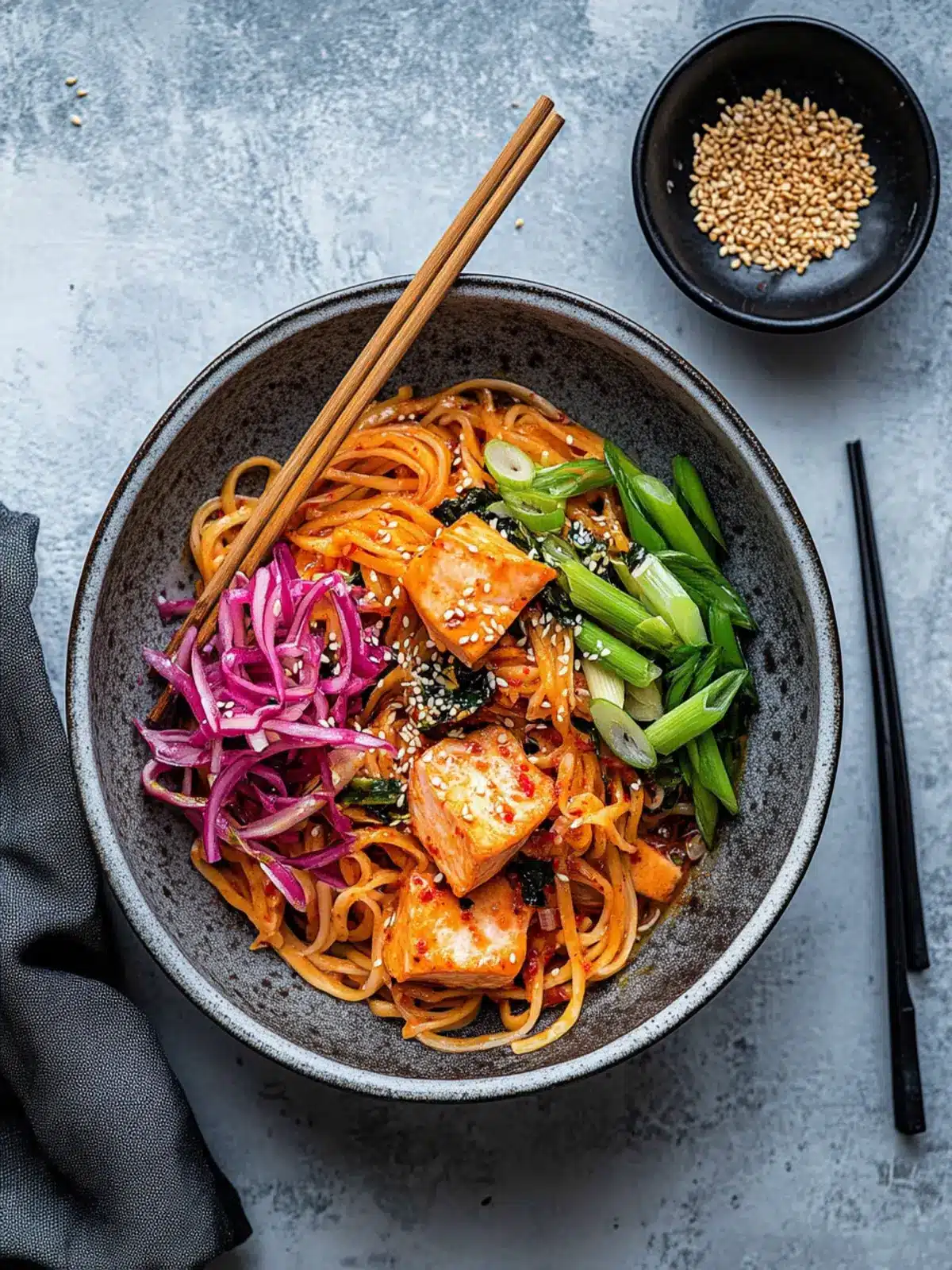
Picture this: it’s a busy weeknight, and the thought of yet another bland meal from the drive-thru has you feeling uninspired. But what if I told you that you could whip up a restaurant-quality dish in your own kitchen that’s bursting with flavor and nutritious ingredients? Enter my go-to recipe for Gochujang Noodles with Salmon!
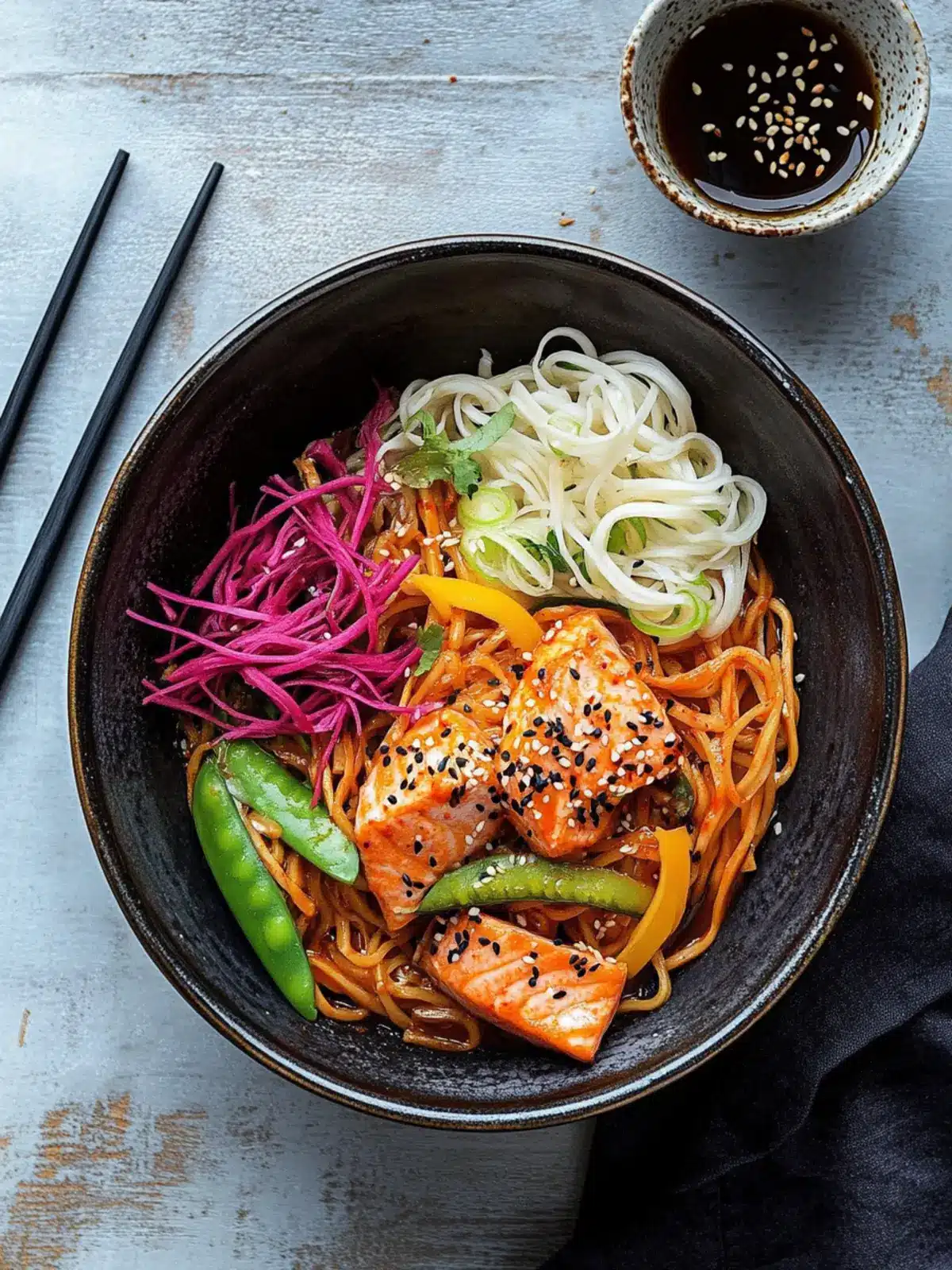
As soon as the spicy aroma of gochujang mingles with the freshness of sautéed veggies and perfectly cooked salmon, you’ll forget all about fast food. The vibrant colors of the bell pepper and green beans contrast beautifully with the rich, flaky fish, while a touch of pickled cabbage adds a delightful crunch. This dish not only satisfies your craving for something hearty and flavorful, but it also offers an exhilarating twist that will leave your taste buds dancing.
So let’s dive into this easy-to-make stir fry that turns an ordinary evening into a festive dinner celebration. Trust me, your family (and your palate) will thank you!
Why love this Gochujang Noodles with Salmon recipe?
Quick and Easy: This dish can be ready in a flash, perfect for busy weeknights.
Bold Flavors: The gochujang packs a spicy punch, while the combination of soy sauce and sesame oil rounds out the taste.
Fresh Ingredients: Crisp veggies and flaky salmon provide both nourishment and a vibrant look, making your plate as beautiful as it is delicious.
Customizable: Feel free to swap in your favorite seasonal vegetables or proteins — the versatility of this recipe makes it a crowd-pleaser!
A Gourmet Touch: With its restaurant-quality flair, your family will think you’ve been cooking for years. Upgrade your dinner game and consider pairing this with a side of your favorite pickled cabbage for extra crunch!
Gochujang Noodles with Salmon Ingredients
Get ready for a flavor explosion with these key ingredients!
For the Sauce
- Gochujang – Adds a spicy and savory kick that elevates the dish.
- Soy Sauce – Provides a rich umami flavor that complements the salmon beautifully.
- Rice Wine Vinegar – Offers a tangy balance to the sauce’s richness.
- Sesame Oil – Imparts a nutty aroma that enhances the overall dish.
- Fresh Ginger, grated – Adds warmth and depth to the flavor profile.
- Garlic cloves, grated – Infuses a fragrant touch that pairs perfectly with salmon.
For the Pickled Cabbage
- Red Cabbage, shredded – Brings crunch and a pop of color to your plate.
- Fresh Ginger, sliced into matchsticks – Adds a zesty and pungent flavor to the pickling mix.
- Rice Wine Vinegar – Used again for a bright tanginess in the pickled cabbage.
- Water – Helps to dilute the vinegar for a perfect balance.
- Salt – Enhances the flavors and aids in the pickling process.
- Sugar – Provides a touch of sweetness to counter the vinegar’s tartness.
- Gochugaru (optional) – Adds extra heat and a smoky flavor if desired.
For the Stir Fry
- Vegetable Oil – Used for frying, ensures a nice sear on the salmon and veggies.
- Yellow Bell Pepper, cut into strips – Offers sweetness and a vibrant color contrast.
- Fine Green Beans, cut in half – Adds a crisp texture and fresh taste.
- Sugar Snap Peas, cut in half diagonally – Sweet and crunchy, they brighten the dish.
- Green Onions, cut into 3-inch pieces and halved – Brings a mild onion flavor and visual appeal.
- Salmon Fillets, skin on (~240g) – Provides rich flavor and flaky texture, making this dish standout.
- Shandong Ramen Noodles, cooked and drained (or soba noodles) – Heartiness to the dish that makes it fulfilling.
Embrace the excitement of cooking with these Gochujang Noodles with Salmon ingredients, and watch as they come together to create an unforgettable culinary experience!
How to Make Gochujang Noodles with Salmon
-
Prepare the Sauce: In a bowl, whisk together gochujang, soy sauce, rice wine vinegar, sesame oil, grated ginger, and grated garlic. This sweet and spicy sauce will be the star of your dish!
-
Make the Pickled Cabbage: In another bowl, combine shredded red cabbage, sliced ginger, rice wine vinegar, water, salt, sugar, and optional gochugaru. Set aside for about 10 minutes to develop flavors while you cook.
-
Heat the Oil: In a large skillet or wok, heat vegetable oil over medium-high heat. Wait until it shimmers, indicating it’s ready for stir-frying the veggies.
-
Stir-Fry the Veggies: Add the yellow bell pepper, green beans, sugar snap peas, and half the green onions to the skillet. Stir-fry for 3-4 minutes until the vegetables are tender-crisp and vibrant.
-
Cook the Salmon: Slide the veggies to one side and place the salmon fillets, skin side down, into the skillet. Cook for about 4-5 minutes on each side until the salmon is cooked through and flakes easily.
-
Combine Noodles and Sauce: Add the cooked noodles to the skillet and pour the prepared sauce over everything. Toss gently to combine, ensuring that everything is evenly coated. Heat for an additional 1-2 minutes.
-
Serve: Plate the stir fry and garnish with the remaining green onions and the tangy pickled cabbage on the side. Enjoy a beautiful and flavorful meal!
Optional: Squeeze fresh lime juice over the stir-fry for an extra zing!
Exact quantities are listed in the recipe card below.
What to Serve with Gochujang Noodles with Salmon?
Elevate your meal experience by pairing these vibrant, spicy noodles with delightful sides and drinks.
- Crispy Spring Rolls: These golden bites are packed with fresh veggies and a hint of crunch; perfect for dipping in a sweet chili sauce.
- Garlicky Bok Choy: Its tender greens sautéed with garlic and sesame oil provide a fresh, wholesome contrast to the rich noodles.
- Avocado Salad: The creaminess of ripe avocado, tossed with cucumber and lime juice, complements the spiciness beautifully.
- Sesame Roasted Brussels Sprouts: With a nutty aroma and crispy edges, these veggies add an earthy richness that balances your dish.
- Chilled Green Tea: Refreshing and light, this drink cleanses the palate and enhances the savory notes of the stir fry.
- Mango Sticky Rice: This delightful dessert offers a sweet, tropical finish that harmonizes with the spice of the noodles — a true feast!
Pairing these options with your Gochujang Noodles with Salmon creates a harmonious dining experience that your family will adore. Enjoy the journey of flavors!
How to Store and Freeze Gochujang Noodles with Salmon
Fridge: Keep any leftovers in an airtight container for up to 3 days, ensuring the salmon, veggies, and noodles remain fresh and flavorful.
Freezer: While best enjoyed fresh, you can freeze the stir fry for up to 2 months. Store in a freezer-safe container, but note that noodles may become soft upon reheating.
Reheating: For best results, thaw overnight in the fridge. Reheat gently on the stovetop over low heat, adding a splash of water or broth to ensure they don’t dry out.
Pickled Cabbage: The pickled cabbage can be stored in the fridge for up to 1 week, making it an excellent make-ahead option to enjoy with your Gochujang Noodles!
Gochujang Noodles with Salmon Variations
Get ready to tailor this dish to your taste buds and pantry!
-
Dairy-Free: Substitute soy sauce with tamari or coconut aminos for a gluten-free and dairy-free option without losing flavor.
-
Veggie Power: Swap in your favorite seasonal veggies like broccoli or zucchini for a different texture and taste; they’ll soak up that delicious sauce beautifully.
-
Heat Level: Add more gochugaru if you crave extra heat, or toss in some sliced fresh chili peppers to bring a fiery kick!
-
Protein Options: Replace salmon with chicken, shrimp, or tofu for a delightful twist, ensuring you cook them properly to lock in all that flavor.
-
Noodle Alternatives: Experiment with spiralized zucchini or cauliflower rice for a lighter, low-carb version while maintaining that satisfying texture.
-
Herb Infusion: Garnish with fresh cilantro or basil instead of green onions for a fragrant touch that adds freshness and vibrancy.
-
Sweet & Savory: Drizzle with honey or maple syrup for a hint of sweetness that balances the spice and shines through your dish.
-
Marinated Salmon: Let your salmon fillets marinate in the sauce for 30 minutes before cooking for an even deeper flavor experience that will wow your family!
Don’t be afraid to mix and match these variations—cooking is all about finding what makes you smile!
Make Ahead Options
These Gochujang Noodles with Salmon are perfect for busy home cooks looking to save time during the week! You can prepare the sauce and pickled cabbage up to 24 hours in advance. Simply whisk together the sauce ingredients and store them in an airtight container in the refrigerator. For the pickled cabbage, mix the ingredients and let them pickle before refrigerating. Additionally, chop the vegetables and store them in separate containers for easy access. When you’re ready to serve, just heat the vegetable oil, stir-fry the prepped veggies for a few minutes, add the salmon to cook through, and toss in the noodles and sauce for a quick, satisfying meal that tastes just as delicious as if freshly made!
Expert Tips for Gochujang Noodles with Salmon
-
Perfect Sauce Balance: Ensure the sauce is well-balanced. Adjust the gochujang to suit your spice preference; start with less if you’re unsure!
-
Veggie Crispiness: Stir-fry until vegetables are just tender-crisp. Overcooking can lead to mushy veggies; aim for vibrant colors and textures.
-
Cooking Salmon Gently: Cook the salmon skin-side down first for a crispy texture, then flip it. Watch closely to avoid overcooking; it should flake easily.
-
Noodle Integration: Add noodles at the end and toss quickly to combine without clumping. This ensures they’re evenly coated with the flavorful sauce.
-
Pickled Cabbage Rest: Let your pickled cabbage sit for at least 10 minutes to develop flavors. This step enhances the crunch and zing alongside your Gochujang Noodles.
Gochujang Noodles with Salmon Recipe FAQs
How do I choose the right salmon for this recipe?
Absolutely! When selecting salmon fillets, look for skin-on fillets with bright, vibrant flesh. The flesh should be moist and free of dark spots or any off-smells. Fresh salmon is usually firm to the touch and bounces back when pressed, indicating its freshness. If possible, opt for wild-caught salmon for a richer flavor and better texture.
How should I store leftovers of the Gochujang Noodles with Salmon?
Very simple! Store any leftovers in an airtight container, and they will stay fresh in the fridge for up to 3 days. Make sure to keep the components separate (salmon, veggies, and noodles) whenever possible to maintain the best texture. If you want to enjoy the dish later, let it cool completely before sealing!
Can I freeze Gochujang Noodles with Salmon?
Yes, you can freeze the stir fry, albeit with some considerations. Store the mixed dish in a freezer-safe container for up to 2 months. However, be aware that the noodles may soften when reheated. For best results, thaw it in the fridge overnight, and when reheating, add a splash of water or broth to keep things moist.
What if my vegetables become mushy when stir-frying?
It happens! To prevent mushy vegetables, make sure to stir-fry them until they’re just tender-crisp, usually around 3-4 minutes. If you’re worried about overcooking, you can briefly blanch them in boiling water beforehand for about a minute and then shock them in cold water right away. This keeps the veggies bright and maintains their crunch in the final dish.
Is this recipe suitable for my gluten-intolerant friend?
Definitely! You can make it gluten-free by swapping the soy sauce for tamari or a gluten-free alternative. Additionally, check that your gochujang and noodles are also gluten-free, as some brands might contain gluten. This way, everyone can enjoy this delightful dish without worry!
How can I enhance the pickled cabbage’s flavor?
For a zesty kick, you can add a bit of lemon or lime juice into the pickling mixture. Let it sit for at least 10 minutes for the flavors to meld beautifully. You can also experiment by adding a sprinkle of sesame seeds or even a touch of chili flakes for extra spice.
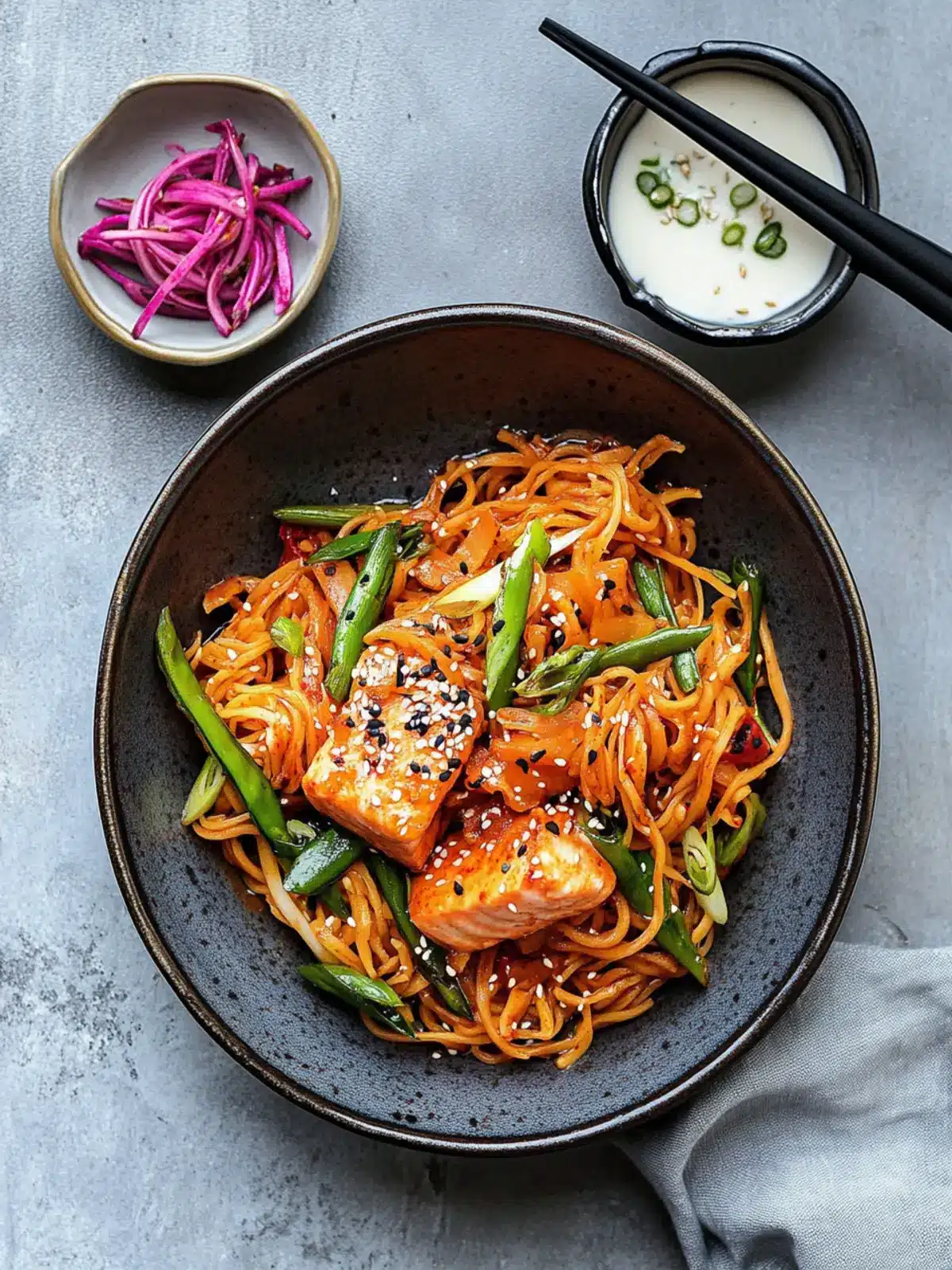
Spicy Gochujang Noodles with Salmon for a Flavor Blast
Ingredients
Equipment
Method
- Prepare the Sauce: In a bowl, whisk together gochujang, soy sauce, rice wine vinegar, sesame oil, grated ginger, and grated garlic.
- Make the Pickled Cabbage: In another bowl, combine shredded red cabbage, sliced ginger, rice wine vinegar, water, salt, sugar, and optional gochugaru. Set aside for about 10 minutes.
- Heat the Oil: In a large skillet or wok, heat vegetable oil over medium-high heat.
- Stir-Fry the Veggies: Add the yellow bell pepper, green beans, sugar snap peas, and half the green onions to the skillet. Stir-fry for 3-4 minutes.
- Cook the Salmon: Slide the veggies to one side and place the salmon fillets in the skillet. Cook for about 4-5 minutes on each side.
- Combine Noodles and Sauce: Add the cooked noodles to the skillet and pour the prepared sauce over everything. Toss gently.
- Serve: Plate the stir fry and garnish with the remaining green onions and pickled cabbage.